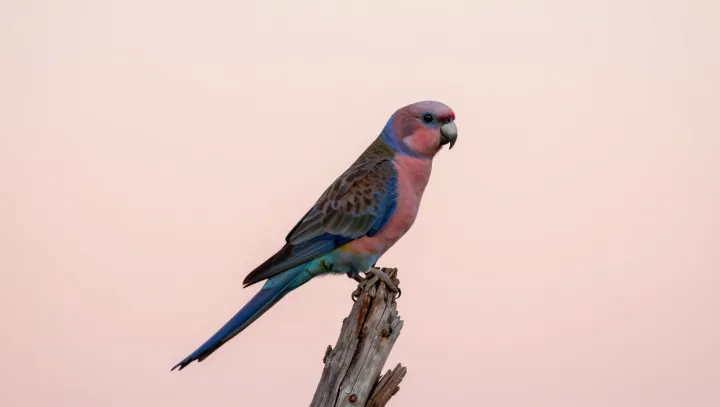
A hollow tree can matter more to Bourke's parrot than a patch of seed-rich ground. Food keeps the pink-and-blue bird alive, but a suitable cavity gives its eggs and chicks shelter in Australia's dry interior, where exposed nests would face heat, weather and predators. The distinction is not small.
Cavity nesting is a bargain the parrot cannot easily make without trees. Bourke's parrots use hollows in living or dead trees, rather than excavating their own; inside, the female incubates the eggs while the male brings food. The cavity offers a more sheltered microclimate than an open nest and can limit access for some predators, although it is no guarantee of safety. Outside, adults forage mainly for seeds, often around dawn and dusk. A woodland must therefore provide both a place to feed and a place to breed, close enough for the birds to use.
The hollow exposes a longer dependency. Many tree cavities develop as wood ages, decays or loses branches, so a tree planted today cannot immediately replace an old one removed from a breeding area. Clearing mature trees can reduce nesting sites even where vegetation remains, and competition for the cavities that survive can add pressure. Conservation means retaining hollow-bearing trees as well as allowing younger trees to grow into them. In a country where rain may be scarce, the dark interior of an old trunk holds a different kind of inheritance.