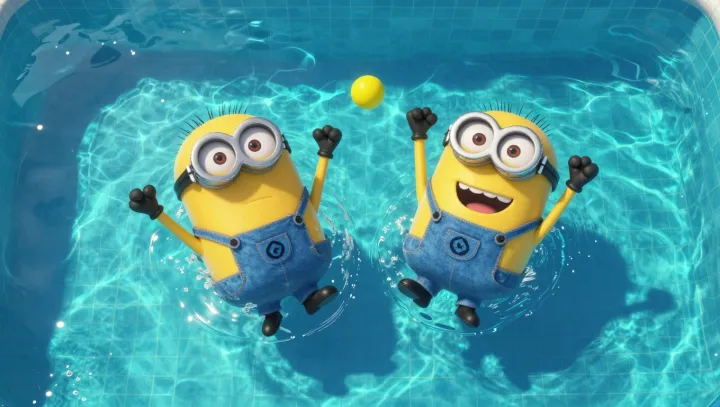
The pool makes a convincing interpreter. Two Minions in goggles and blue overalls splash about, their bodies doing much of the talking before a viewer has decoded a syllable. A flailing arm or a startled stare can turn a jumble of sounds into an invitation to laugh.
Their apparent nonsense is more carefully made than it sounds. Minion speech mixes fragments of real languages with invented sounds, delivered with the rhythm and emotional emphasis of conversation. Pierre Coffin, a director and voice performer in the franchise, gives many of the characters their voices. The words need not be translated. Prosody, the rise and fall of speech, can suggest excitement or alarm, while gestures and facial expressions narrow the range of possible meanings. A viewer may miss a borrowed word and still understand that a Minion wants attention or fears trouble.
The films rely on more than a clever vocal trick. Physical comedy supplies context: an object, a mishap and a reaction can explain one another without a sentence of exposition. Animators can also hold a look long enough for an audience to register an emotion before the next burst of action. Not every joke travels intact. A recognizable fragment may delight one audience and pass another by, and comic timing is never guaranteed to work for everyone. Yet the bargain is generous: viewers are not asked to master a vocabulary before joining the fun. At the pool, meaning hangs for a moment in the air, as readable as a splash.