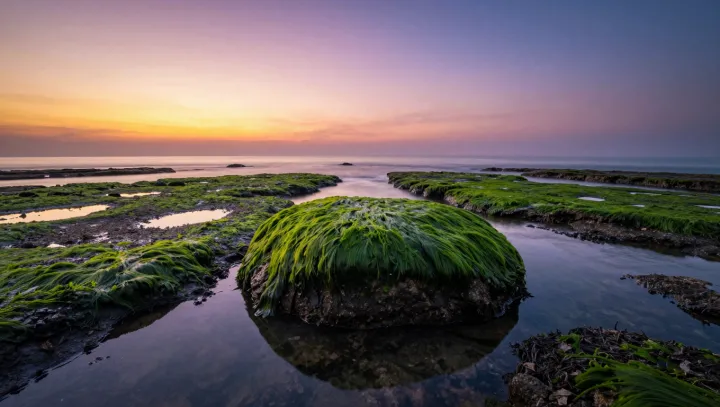
A tide pool's shelter is deceptive. Beneath a vivid evening sky, water gathered around a green-covered boulder reflects the sunset, while its inhabitants face conditions that can shift far faster than those offshore. The rock breaks the force of waves. It also leaves a small body of water exposed when the tide retreats.
Isolation exacts a price. In the open ocean, vast volumes of water temper changes in temperature and chemistry; in a shallow pool, sunshine can warm the water quickly, while a cold night can cool it. Evaporation concentrates dissolved salts, raising salinity, whereas rain can dilute them. Organisms must manage the resulting movement of water across their tissues through osmoregulation. Oxygen, too, can swing sharply: algae produce it through photosynthesis in daylight, but plants, animals and microbes continue consuming it through respiration after dark. In a crowded pool, oxygen can fall to stressful levels before the sea returns.
Survival depends on flexibility, not comfort. Mussels can close their shells to limit water loss, though doing so also restricts feeding and gas exchange. Some mobile animals retreat into shaded crevices or deeper water; others tolerate changes that would overwhelm species accustomed to steadier conditions. Exposure brings another bargain: a pool may offer refuge from large ocean predators, yet birds can reach into it, and competition for space and food can be intense. When the tide rises, it reconnects the pool to the sea, replenishing water and carrying food. For a while, the mirrored basin belongs to the ocean again.