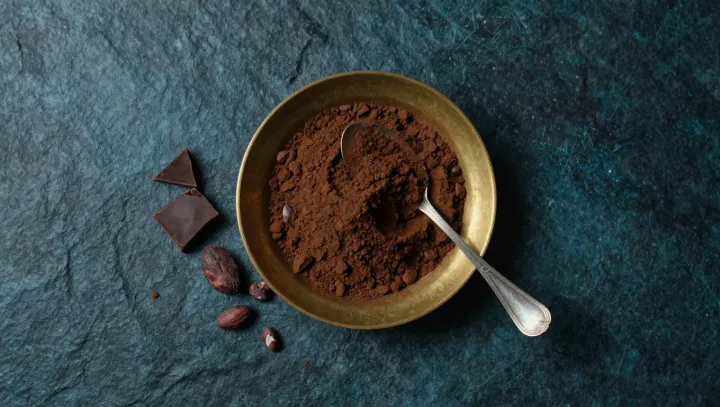
A cocoa swap is never merely cosmetic. Natural and Dutch-process powders can send the same cake in different directions, changing its color, taste and rise. The distinction begins with acidity, an invisible property with visible consequences once the powder meets the rest of the batter. The crumb tells the story.
Natural cocoa brings more than a sharp chocolate flavor to the bowl. Made from cocoa solids after much of the cocoa butter has been removed, it retains acids that can react with baking soda. That reaction produces carbon dioxide, whose bubbles expand in the oven and help lift the cake. Dutch-process cocoa has been treated with an alkali to reduce its acidity; it is generally darker and tastes mellower. Its chemistry behaves differently. In a recipe that relies on natural cocoa as a significant source of acid, replacing it with Dutch-process cocoa may leave baking soda with too little acid to react fully, producing a shorter cake or an unpleasant alkaline taste.
The safest substitution is an informed one, not a blind exchange. Recipes using baking powder, which contains its own acid, may be less dependent on cocoa for leavening, though other acidic ingredients and the recipe's proportions still matter. Read the whole formula. If a cake calls for natural cocoa and baking soda, choose the specified powder or use a tested recipe designed for Dutch-process cocoa rather than guessing at adjustments. Cocoa also varies among brands, so even a correct match can alter the shade and depth of flavor. Beneath the dark surface of a slice lies a negotiation between chemistry and appetite.