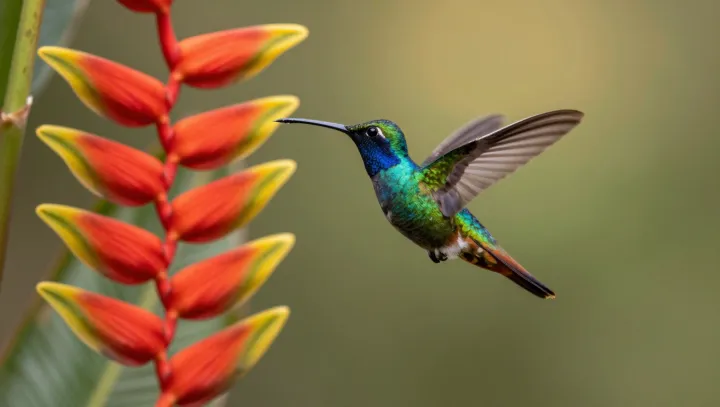
The black-throated mango does not sip nectar through a straw. It traps it. This hummingbird's tongue uses a mechanism more intricate than the familiar image of a bird sucking sweetness from a flower, with flexible structures that open in liquid and close around it as the tongue retreats.
The distinction matters because the tongue is a moving trap, not a hollow pipe. Its tip divides into two branches, each lined with thin extensions called lamellae. As the tip enters nectar, the branches spread and the lamellae unfurl; as it withdraws, they curl back and help retain the liquid. Surface tension helps hold nectar between these structures, while the tongue's elasticity contributes to their movement. No suction is needed. Once the tongue returns to the bill, the bird transfers the collected liquid toward its throat and repeats the motion.
Nectar, though abundant in energy, is not the whole bargain. The black-throated mango also eats small insects, which provide nutrients that a sugary diet alone cannot supply. Flower visits can serve another purpose: pollen may cling to a bird as it feeds and travel to another bloom, although the outcome depends on the flower and the visit. The exchange is uneven. A flower offers a reward, a bird takes it, and between them passes the dust on which another flower may depend.