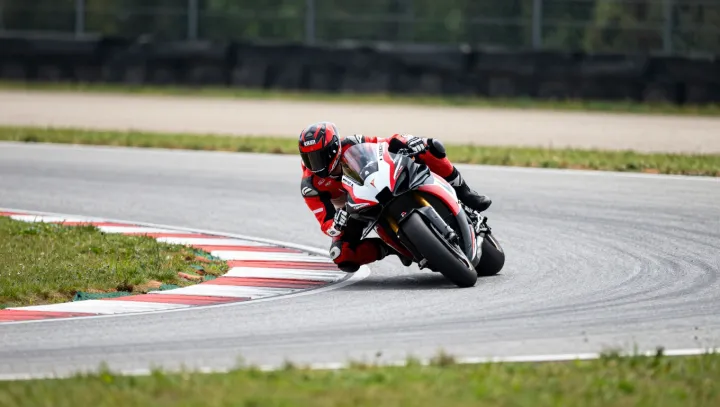
Less motorcycle lean can mean a faster way around a corner. The trick is not to eliminate lean, but to move some of it from the machine to the rider. By shifting inward, a racer changes the position of the combined center of mass while the motorcycle stays closer to upright.
The governing geometry is unforgiving. At a given speed and turn radius, the tires must provide the centripetal force that bends the motorcycle's path, while gravity pulls the combined mass downward. To balance those forces, the combined center of mass must sit inward of the tire contact patches. Moving the rider inward helps achieve that position with less lean from the motorcycle itself. The forces still demand their due.
Clearance is the immediate prize. With the machine more upright, hard parts have more room before they scrape the track, and the rider has more scope to adjust the line. That does not create free grip: tire traction remains limited, and braking or acceleration also draws on it. Nor does hanging off guarantee a faster lap; speed, corner radius and tire condition all matter. The picture is deceptive. Body low and motorcycle raised, the racer appears to defy the corner, while every force remains in its account.