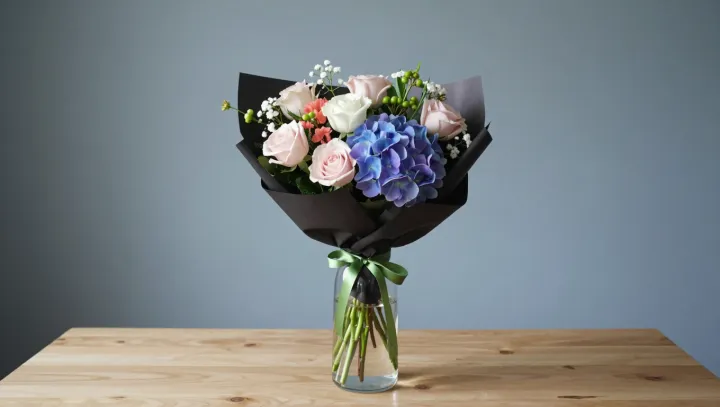
A full vase can still leave flowers thirsty. Roses and hydrangeas depend on an open pathway from their cut stems to their blooms, and that pathway can fail even when the water level looks generous. The trouble is often hidden below the surface, where a stem draws its drink.
The stem, not the vase, is the weak link. Water travels through xylem, a network of narrow vessels that supplies petals and leaves as water evaporates through transpiration. Bacteria can accumulate at cut ends and obstruct that flow; air entering the vessels can also form an embolism, interrupting the water column. A bloom then loses water faster than it can replace it, and its tissues lose firmness. Hydrangeas are particularly quick to show the strain, while roses may droop at the neck below the flower.
Cleanliness is the most useful form of prevention. Wash the vase, fill it with fresh water and remove leaves that would sit below the surface, where they can decay and encourage bacterial growth. Trim the stems with clean, sharp shears before arranging them; recut them and change the water regularly. Use flower food according to its label if available. Keep the bouquet cool and out of direct sunlight, which can speed water loss. The flowers may still age, but the water has a better chance of reaching them. In the quiet vase, the unseen work goes on.