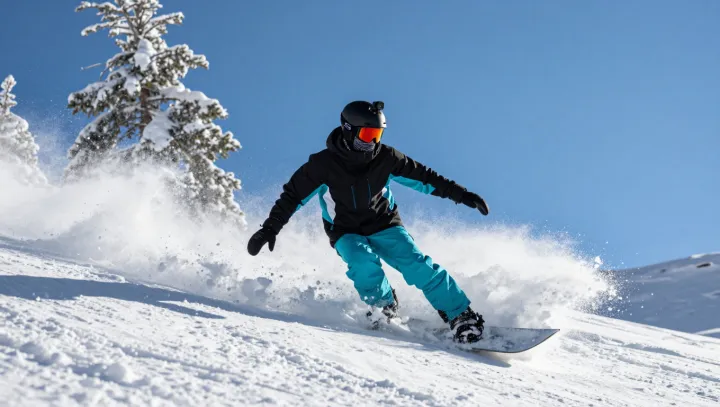
Powder punishes the habits that make a snowboard shine on a groomed run. On packed snow, a tipped edge can grip a firm surface and carve a clean arc. In deep snow, the board must also stay near the surface, where its speed and shape matter as much as its edge.
Flotation is less about muscle than pressure distribution. A wider nose spreads the rider's weight over more snow, while a tapered shape can help the tail sink and the nose rise. Speed helps the board plane over the snow; slow down too much, and drag can pull it deeper. There is no magic threshold. Snow density, slope angle, rider weight and board design all affect how easily it moves. Leaning hard on the back leg may lift the nose for a moment, but it can exhaust the rider and make balance harder. A centered, adaptable stance and a smooth line help preserve momentum without treating speed as an end in itself.
The greater risk lies beyond technique. Deep snow in uncontrolled backcountry terrain can conceal avalanche danger, and a promising slope may be connected to unstable snow above. Riders should check the local avalanche forecast, seek training, travel with partners and carry a beacon, probe and shovel. Equipment is no guarantee. Terrain choice and a willingness to turn back remain essential, including when the snow looks inviting. A board leaves a fleeting line; the mountain keeps its own counsel.