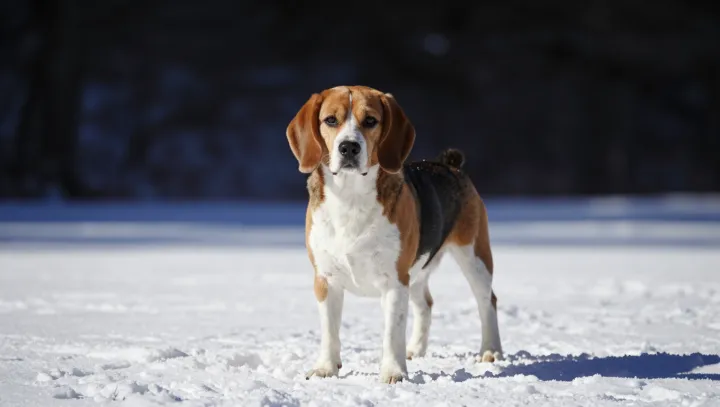
The tricolor beagle in the snow is built for a task more absorbing than obedience. Its compact frame and hanging ears mark a scent hound, but the real drama begins when its nose finds a trail. A familiar call can suddenly face formidable competition.
That apparent stubbornness is better understood as attention shaped by breeding. Beagles were developed to follow the scent of hares, often working in packs while hunters followed on foot. Their olfactory receptors detect airborne odor molecules, and signals travel to the olfactory bulb for processing. A trail is not a painted line. Odors disperse and change with wind, moisture and terrain, so a dog must keep sampling the ground and adjusting its course. The breed's persistence served hunters who needed hounds to continue working when prey was out of sight; it does not mean a beagle deliberately dismisses every command.
Good training starts by respecting that inheritance rather than treating it as a defect. Recall can be taught with rewards and practiced around gradually stronger distractions, but no exercise guarantees a response when an enticing trail takes hold. A secure enclosure or leash offers protection where a dog might otherwise wander into danger. Scent games can give that searching instinct a safer outlet. The contrast remains arresting: a small dog stands within calling distance, yet its attention is already traveling somewhere beyond the snow.