The cone is not merely a handle. Its sweetness, crunch and toasted aroma alter the experience of a scoop before the ice cream has had a chance to melt. The same vanilla can taste sharper against a sugar cone and rounder against a waffle cone, depending on how each wafer is made.
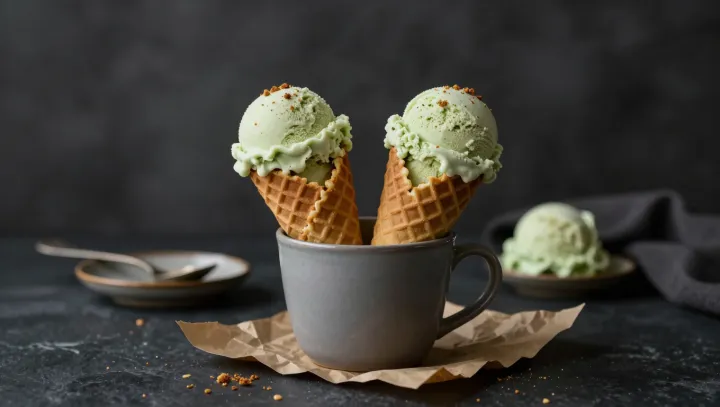
A sugar cone rewards restraint. Typically thin, firm and distinctly sweet, it supplies a concentrated crunch that can sharpen the contrast with soft ice cream; its sweetness may also make a mildly sweet scoop seem less sweet by comparison. A waffle cone, often thicker and more irregular, can bring a broader toasted flavor and a more substantial bite. Neither is inherently better. Recipes and baking time matter: the Maillard reaction produces some of the browned aromas associated with baked wafers, while caramelization can contribute flavors when sugars are heated.
A good pairing leaves room for both parts. Vanilla gains definition from a crisp sugar cone, while chocolate can stand up to the deeper toast of a waffle cone. Green tea ice cream, with its grassy and sometimes bitter notes, may fare better in a less assertive cone; a very sweet wafer can soften that bitterness but obscure delicate flavors. Aroma matters as much as crunch. Through retronasal olfaction, aromas released during chewing travel from the mouth toward the nose, joining taste and texture in a single impression. What seems like one flavor is really a meeting at the edge of the scoop.