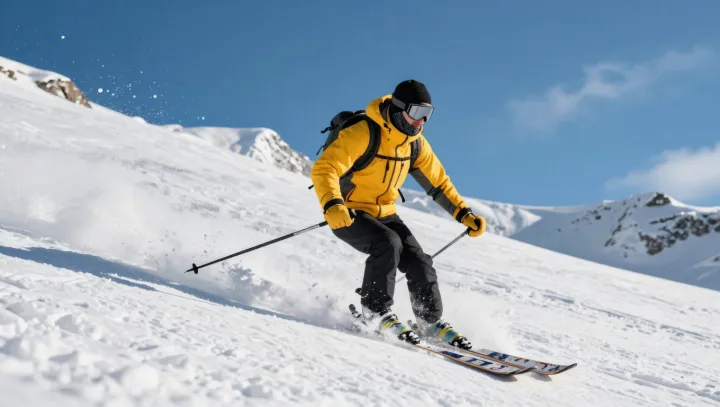
Leaning back is a costly answer to the fear of sinking. It can lift ski tips, but it also shifts pressure toward the tails and makes the legs work harder, leaving the skier with fewer options when the snow changes. The apparent escape becomes a trap.
A centered stance gives the skier more room to respond. With the center of mass balanced over the feet, ankles and knees can flex as the skis move through uneven snow, helping absorb changes in resistance without forcing the body into a rigid position. Pressure distribution matters here: loading the tails excessively can make it harder to guide the fronts of the skis into a turn. The legs must keep working. In deeper snow, both skis generally benefit from sharing the load, rather than relying on the pronounced outside ski pressure familiar from turns on firm groomed runs.
Control in powder is less a matter of floating above the snow than of moving with it. A skier can begin a turn by adjusting pressure and steering both legs, allowing the skis to bend and change direction while the body remains adaptable. Speed and ski design affect how much lift the snow provides, so a centered stance is not a promise that every tip will stay visible. Flexibility buys time. On suitable terrain, with appropriate instruction and attention to snow conditions, that extra room to move can turn a defensive struggle into a smoother descent. Behind the skis, the powder closes over the evidence.