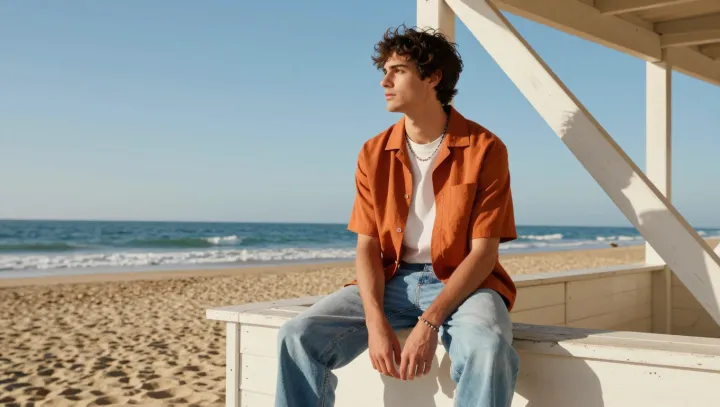
Orange is easier to wear than its reputation suggests. The trick is denim. Against light blue jeans, an orange short-sleeved shirt becomes a deliberate accent rather than a challenge to solve, while a white T-shirt between the two gives the eye a place to rest.
The contrast does much of the work. Orange and blue sit opposite each other on the color wheel, a complementary color relationship that makes each appear more vivid beside the other. Yet washed denim rarely reads like a block of pure blue: its faded surface and familiar texture soften the effect. White adds breathing room. Worn open over the T-shirt, the shirt lets the brighter color frame the outfit instead of covering the whole torso. Button it up and the orange takes a stronger lead; leave it open and the balance shifts toward the white layer.
Fit matters more than extra decoration. A shirt with room through the body and jeans that fall comfortably away from the leg keep the combination casual, while lightweight fabrics can make the layers more comfortable in warm weather. Clean white sneakers or understated sandals will not compete with the color pairing; a belt or watch can add structure without demanding attention. The shade is flexible, too: a muted, earthy orange offers a quieter effect, while a brighter one makes a more visible statement. The choice changes the mood, not the formula. In the end, the strongest color is given space to speak because everything around it knows when to be quiet.