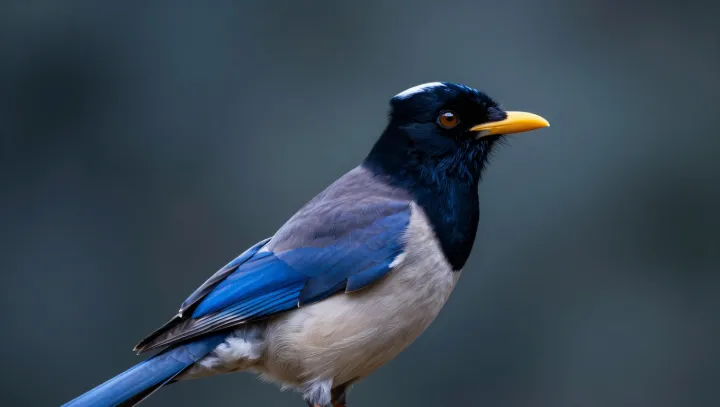
The yellow-billed blue magpie's long tail is both a flight instrument and a burden. Control has a price. Its feathers can help the bird steer and brake, yet the same extended surface adds weight and drag, making its balance between agility and efficiency less straightforward than its appearance suggests.
The payoff is clearest when flight demands precision. By spreading and shifting its tail, a bird can alter aerodynamic forces and generate torque, helping change its orientation or slow an approach to a perch. Small adjustments can matter. A tail also increases drag, however, and its mass must be carried throughout flight. Growing and maintaining feathers requires resources, too. How much these costs reduce the magpie's efficiency depends on factors including speed, feather condition and the kind of flight being measured.
The harder question is whether the tail's benefits outweigh those costs in everyday life. A feature need not be ideal for every flight to persist: advantages in maneuvering or display could compensate for disadvantages elsewhere, although the relative importance of those benefits in this species requires evidence. Direct measurements would help. Comparisons of energy use and flight performance, with tail length and other variables carefully accounted for, could test the trade-off rather than merely assume it. In the space between a nimble turn and the effort of carrying its feathers lies the bird's unresolved bargain with the air.