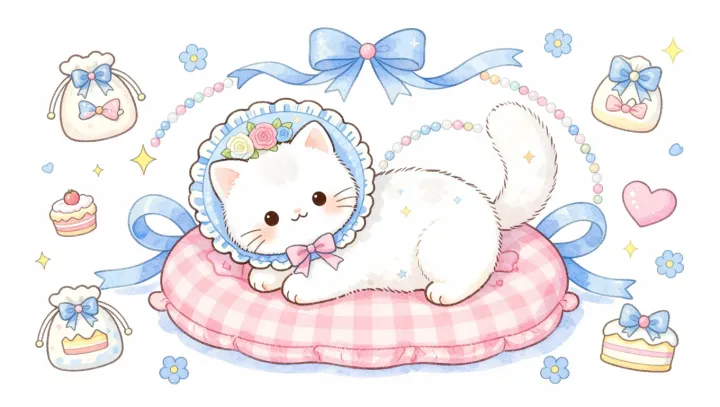
The kitten is designed to disarm. Reclining among ribbons, flowers and sweets, its fluffy body and oversized eyes turn a pastel scene into a study in calculated appeal. The charm is not accidental: features associated with infancy can draw attention and encourage protective feelings, even when the subject is an illustration.
Infancy supplies the visual shorthand. Psychologists call this cluster of features the baby schema: large eyes, a rounded face and a small nose and mouth relative to the head. Such proportions occur in human infants and in the young of many other mammals. In illustrations, exaggerating them can make a kitten appear especially vulnerable, inviting a response that goes beyond simple recognition. The effect has limits. People differ in what they find cute, and a pleasant reaction to an image is not proof that anyone will act more kindly.
Exaggeration is the artist's advantage. The idea of a supernormal stimulus helps explain why an amplified cue might attract more attention than its natural counterpart, although it does not establish how any particular kitten image will affect its audience. Ribbons and sweets add another layer: they frame the animal as a companion in a world of play, rather than a creature making demands. The colors soften the scene. What remains is a small paradox: an image that asks for nothing can make a viewer feel as though something needs care.