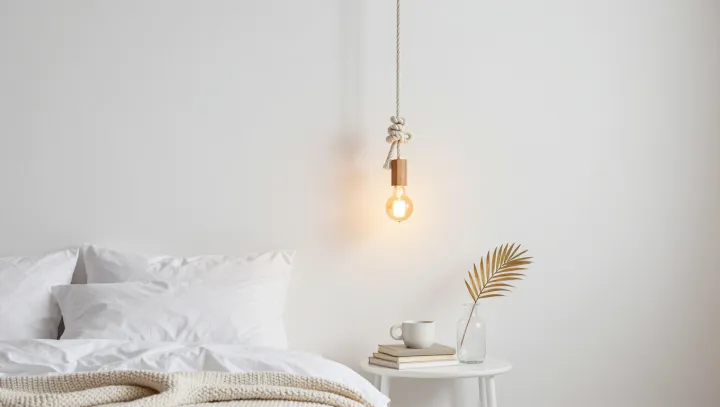
The knot gives the white bedroom something its smooth surfaces cannot: a visible sense of touch. Fibers twist around one another above a wooden socket, interrupting the room's restraint without filling it. The effect is quiet. Even with the same bulb and the same color of light, the pendant can make the space feel less austere.
Texture, rather than brightness, does the work here. The rope's irregular surface contrasts with the cleaner planes around it, while the wood introduces grain and a warmer material association. Neither needs to dominate. In design terms, the pendant gains visual weight from that contrast: the eye has a place to settle without the room acquiring another chair, table, or decorative object. The knot also suggests the work of hands, a small reminder of how the object was made amid an otherwise pared-back setting.
Restraint matters as much as the rope itself. A single pendant can offer enough variation for the surrounding white to feel deliberate rather than vacant, especially when its proportions suit the room and its hanging height leaves the bed area comfortable to use. Keep the installation safe. Choose a fixture rated for its intended use, and have electrical work carried out by a qualified professional. The bulb need not change. Against the stillness of the room, the knot remains a modest interruption: a little evidence of the hand in a space built on leaving things out.