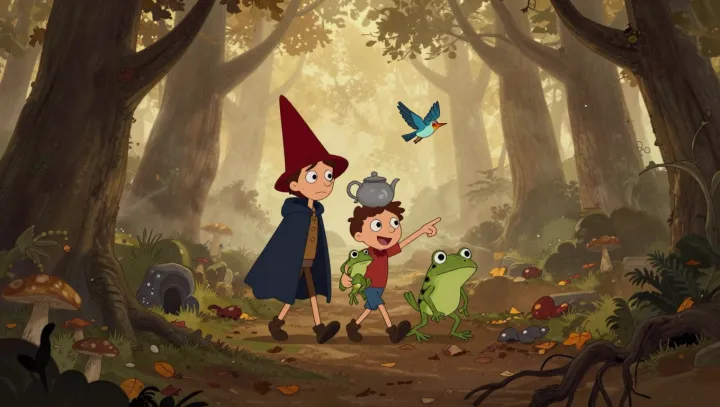
Over the Garden Wall makes mercy more demanding than bravery. Its half-brothers, Wirt and Greg, wander through the Unknown, where autumn leaves and storybook shadows promise familiar fairy-tale dangers. But appearances deceive them. Again and again, the question is not whether the boys can defeat what frightens them, but whether they can understand it.
The series treats its monsters with suspicion, but its heroes' assumptions deserve just as much scrutiny. In Pottsfield, pumpkin-headed figures seem poised to punish the boys; instead, the visitors are sentenced to a spell of manual labor and invited to stay for a harvest celebration. The unsettling villagers are not the threat they first appear to be. This reversal draws on folklore and the fairy-tale motif of the deceptive encounter, turning dread into a lesson in looking twice.
Its deepest danger is despair, not merely the creature that gives despair a voice. The Beast exploits the Woodsman's fear for his daughter, persuading him to keep a lantern burning by claiming that her soul depends on it. Greg, meanwhile, offers himself to the Beast to save Wirt. Courage matters, certainly. Yet Wirt's refusal to accept the bargain, and the Woodsman's decision to extinguish the lantern, break the hold of a threat sustained by fear and deception. In the dark, compassion becomes a way of seeing.