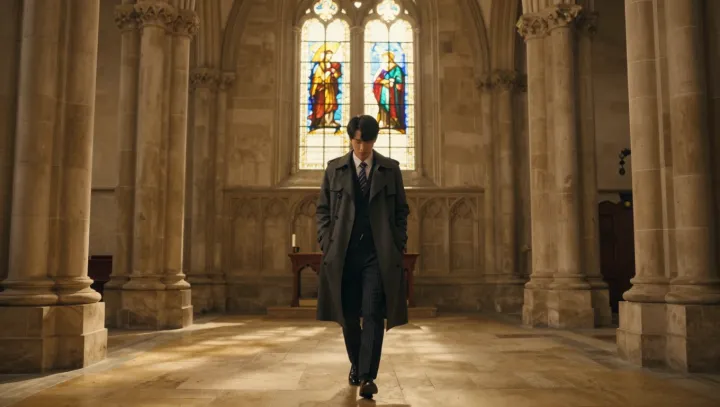
Slim trousers can make a long coat look heavier than it is. The reason is proportion: a generous sweep of fabric above narrow legs concentrates visual weight around the torso, particularly when the coat hangs open over a suit and tie. The legs appear to retreat. The coat takes over.
A fuller cut offers a quieter solution than a tighter one. Give the trousers enough room through the thigh and a measured width at the hem, and they can hold their own against the coat without competing with it. Drape matters here: fabric that falls cleanly from the hip makes a continuous line, while cloth pulled tight across the leg interrupts it. Fit still counts. Excess width that pools around the shoes can make the bottom half look untidy rather than composed, trading one imbalance for another. A modest trouser break, where the hem meets the shoe, usually keeps that line controlled.
The coat should cooperate with the suit, not conceal its shape. Shoulders need enough space for a jacket beneath them, while the body should fall without strain when buttoned; a coat that fits only over a shirt is unlikely to move comfortably over tailoring. Check the outfit in motion. An open coat will swing and reveal more of the trousers, making their width more visible than it is in a static mirror pose. A substantial shoe can also give the hem a visual anchor, though it need not be bulky. In the end, the most persuasive silhouette is not the narrowest one: it is the one in which coat and trousers seem to belong to the same figure.