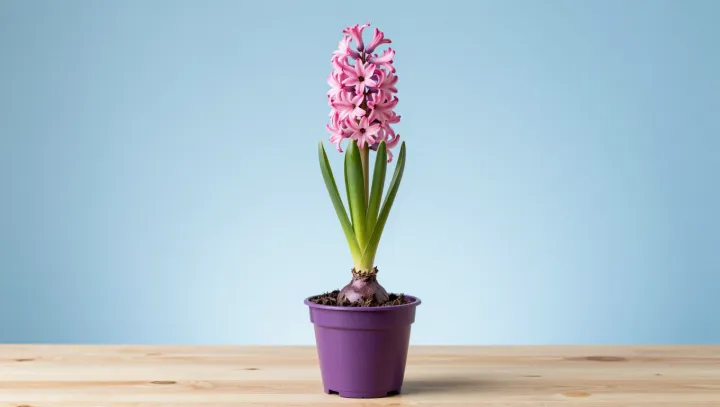
Too much water can starve a hyacinth. Its roots need moisture, but they also need oxygen for cellular respiration. When water fills the spaces between soil particles for too long, oxygen becomes scarce and roots struggle to release the energy they need to absorb water and nutrients.
Good drainage matters more than a generous pour. Choose a pot with drainage holes and a loose, well-drained potting mix, then water when the surface begins to feel dry rather than following a rigid schedule. Check with a finger. Add water to the soil until some drains from the bottom, and empty the saucer so the pot does not sit in water. Keep the soil lightly moist, not saturated; the amount and frequency will vary with the pot, temperature and stage of growth.
A wet bulb is not a healthy bulb. Prolonged saturation can damage roots and encourage organisms that cause root rot, while a soft or mushy bulb can signal decay. Wilt can mislead you. A plant with damaged roots may droop even when its soil is wet, so check the soil before reaching for the watering can. Once flowering has finished, continue watering while the leaves remain green, then gradually reduce watering as they yellow and the plant enters dormancy. In the quiet pot, the boundary between care and excess is thinner than it looks.