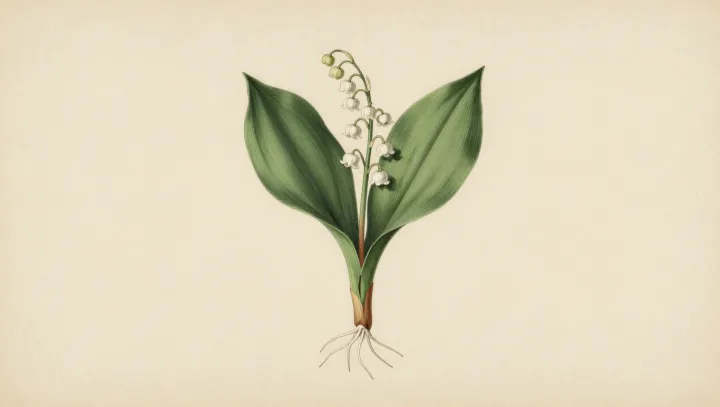
The heart can be deceived by a flower. Lily of the valley contains cardiac glycosides, compounds that interfere with the ion traffic controlling each heartbeat. Its white bells and broad leaves belong to a woodland perennial whose beauty offers no protection against its poison: every part of the plant is toxic.
The plant's chemistry exploits a cellular pump with remarkable consequences. Cardiac glycosides inhibit sodium-potassium ATPase, a membrane protein that normally moves sodium out of heart cells and potassium in. Sodium then accumulates inside. That weakens the sodium-calcium exchanger, which uses the sodium gradient to help remove calcium. With less calcium expelled, more can build up within the cell, increasing the force of contraction but also making abnormal electrical activity more likely.
A stronger contraction is hardly a safer beat. Excess calcium can trigger stray electrical signals, while cardiac glycosides can also slow electrical conduction through the heart, partly by increasing vagal activity. The result may be a slow pulse, conduction block, or other dangerous arrhythmias; nausea and vomiting can also occur. Suspected ingestion warrants immediate contact with emergency services or a poison control center, rather than waiting for symptoms. Beneath the stillness of the white bells lies a chemistry capable of unsettling the body's most familiar rhythm.