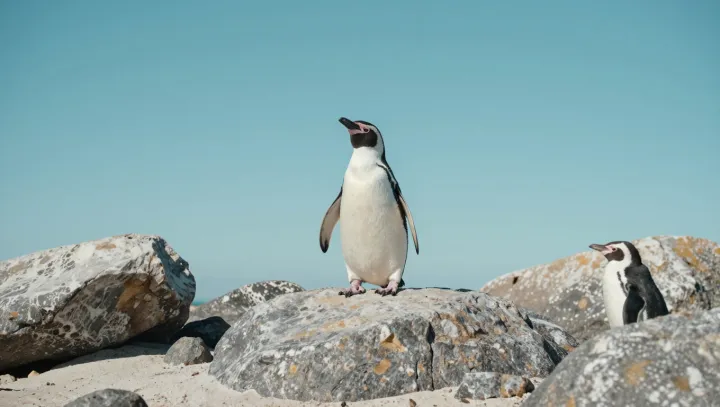
Seawater is less of a threat to banded penguins than it is to most land animals. The trick lies above their eyes. There, salt glands draw excess salt from the blood, allowing these flightless seabirds to drink at sea without allowing salt to build up to dangerous levels.
The arrangement is an elegant bargain: the penguin can use a plentiful water source, but it must pay the metabolic cost of removing salt. Within the supraorbital glands, active transport moves sodium and chloride ions into a concentrated secretion. Salt leaves through ducts connected to the nasal passages, sometimes appearing as droplets at the bill or being expelled when the bird shakes its head. This is osmoregulation at work. The kidneys also handle waste and water balance, but the salt glands are especially important when the penguin takes in more salt than its kidneys can efficiently eliminate.
Life at sea depends on more than a clever filter. Banded penguins use their flippers to pursue fish and other prey underwater, then return to land to breed in colonies. Species in this group occupy coasts and islands in the Southern Hemisphere, where their feeding grounds and nesting sites bind ocean and shore together. The two habitats make different demands. A parent may travel between a nest and offshore feeding areas, carrying nourishment back to its chick; its ability to manage salt helps make those journeys possible. On shore, the bird stands at the edge of the water that sustains it and would overwhelm so many others.