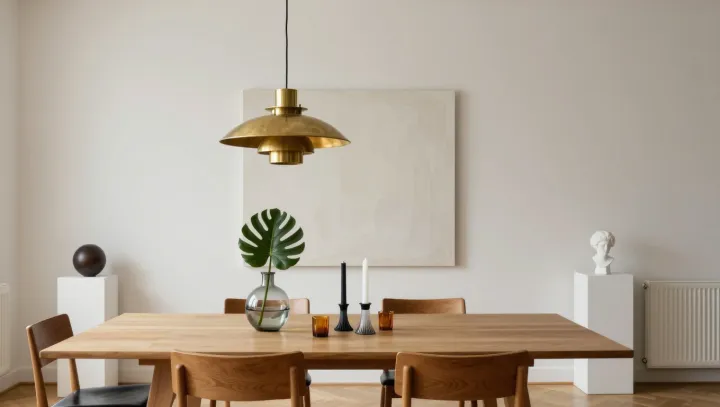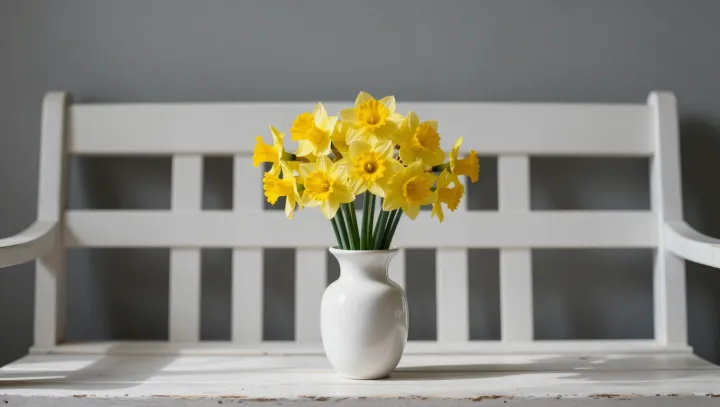
White is never quite neutral. In a living room with a pale sofa, potted plants and a geometric coffee table, its appearance changes as daylight shifts: a warm glow can give way to a cooler cast, while foliage may lend nearby surfaces a faint green tint.
The light source does more decorating than its name suggests. Light has a spectral composition: the balance of wavelengths reaching a surface. Warm lamplight contains proportionally more long wavelengths than cool daylight, and the same white upholstery reflects those differences. Shadows complicate the picture. A wall lit mostly by blue sky can look cooler than one receiving direct sunlight, even when both carry the same paint. Textured throws and cushions add another layer, because their raised fibers catch light while their recesses fall into shadow.
Plants are not passive ornaments. Leaves absorb much of the red and blue light that reaches them and reflect more green; some of that reflected light can strike a nearby wall or sofa, especially when foliage is close and brightly lit. The effect is usually subtle, not a wash of paint. Perception also intervenes: through chromatic adaptation, the visual system adjusts to the prevailing illumination, so a surface can seem whiter after the eye settles. Move a plant, change a lamp or watch the room as daylight shifts, and the balance changes again. The white remains, but its apparent color belongs partly to everything around it.