The highest mountains carry evidence of a vanished sea. Their rocks tell a story that a view from space alone cannot: marine fossils embedded in Himalayan limestone began as remains on an ocean floor, then rose as colliding continents compressed and lifted the crust. The sea came first.
The collision is less like an impact than a prolonged squeeze. Plate tectonics brought the Indian plate against the Eurasian plate, closing much of the ancient Tethys Ocean between them. Layers of sediment, including the remains of marine organisms, hardened into rock; compression then folded, faulted and thrust some of those layers upward. Fossils do not mean seawater once flooded the summits. The rock itself changed altitude. Limestone near the summit of Everest, for example, contains traces of marine life, a record of deposition before the mountain took shape.
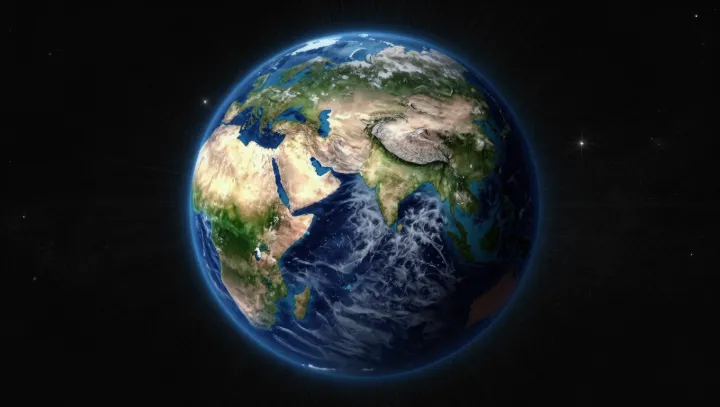
The mountains are still being made, though not without a cost. Continued convergence thickens the crust and contributes to earthquakes, while rivers, glaciers and weathering wear down exposed rock. From orbit, the contrast between mountain chains, plains and oceans can suggest fixed boundaries; on geological timescales, those boundaries shift as plates move and material is recycled. Uplift and erosion work against each other. The fossils offer a measure of that contest, preserving a piece of the seabed even as the rock around it is broken and carried away. A shell's trace remains where waves no longer reach.