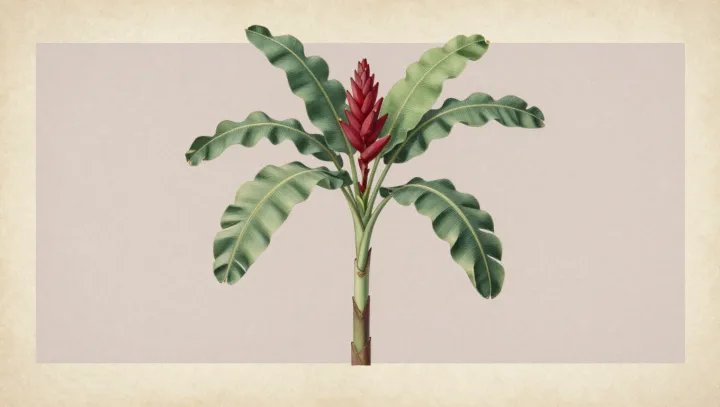
The scarlet banana's boldest advertisement is not its flower. It is a modified leaf. Upright red bracts draw attention to an inflorescence bearing yellow flowers, while broad, banana-like leaves frame the display. That division of labor offers a way to understand why petals are not always the plant's principal signal.
A lasting signal can be more useful than a fleeting flourish. Bracts are modified leaves associated with flowers, and in many plants they remain visible after individual flowers fade. Flowers within an inflorescence may open at different times, allowing a persistent display to advertise several opportunities for pollination without requiring each flower to supply the entire visual attraction. The distinction matters. Petals belong to individual flowers; bracts can help present a group of them.
Visibility, however, is not the same as proof of attraction. Flower visitors respond to combinations of color, shape, scent and reward, and the value of a red bract depends on which animals encounter it and how they perceive color. Pollination occurs when pollen reaches a receptive stigma, not simply when a visitor approaches. The precise contribution of scarlet banana bracts would require observation and experiments that separate their effect from that of the yellow flowers. For now, the display suggests an elegant economy: beneath the enduring red, smaller flowers conduct their brief business.