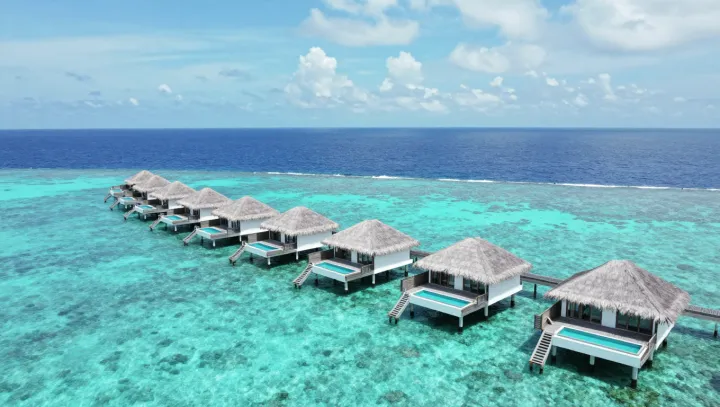
The bungalow's finest asset is also its most vulnerable neighbor. Beneath a private deck, shade can deprive seagrass and corals of sunlight, weakening the photosynthesis on which both depend. The water may remain invitingly clear while the habitat below begins to change. The view conceals much.
Construction can be as damaging as the finished structure. Driving piles and dredging channels can stir sediment, which settles on corals and seagrass or clouds the water, further limiting the light that reaches them. Damage is not automatic: its extent depends on where and how a resort is built, as well as the sensitivity of the habitat. Distance matters. A deck above bare sand poses different risks from one above a seagrass meadow or coral community, although associated walkways and boat traffic can extend the disturbance beyond either footprint.
Good design must reckon with what the postcard leaves out. Avoiding sensitive habitat, limiting dredging and treating wastewater can reduce pressure; monitoring seagrass and coral before and after construction can reveal changes that a surface inspection misses. None of these measures makes a bungalow harmless by definition. A lagoon is a working ecosystem, not merely a pool with an exceptional color. Its apparent stillness is part of the seduction: above the water, a deck promises escape; below it, life must make do with the light that remains.