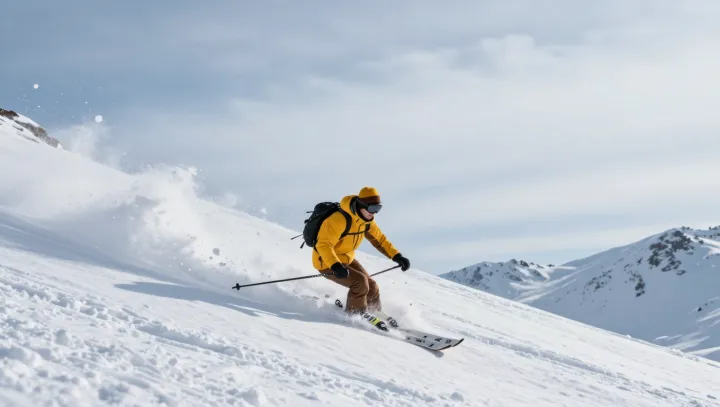
Powder rewards pressure, not a fight for an edge. On a steep slope, snow gives way beneath a ski rather than offering the firm surface needed for the clean grip familiar on groomed runs. The turn comes from a quieter bargain: the ski pushes snow aside, and the snow pushes back.
The distinction is mechanical, not mystical. As a moving ski compresses and displaces snow, pressure builds along its base and sides; that resistance produces a force that can redirect the skier's momentum. Drag slows the ski as well, so speed, snow density and the angle of the ski all affect the response. An edge still matters. It helps shape the ski's interaction with the snow, and it may engage a firmer layer underneath, but loose powder cannot provide the same dependable purchase as packed snow.
Control, then, is less about a dramatic tilt than about managing pressure across both skis. Balanced movements allow the skis to bend and sweep through the snow, while abrupt twisting can bury a tip or disrupt the platform beneath the skier. Terrain and snow conditions change that platform from turn to turn; deep snow can also conceal obstacles, and steep slopes can carry avalanche risk. Technique offers no immunity from those hazards. In the wake of a turn, a curved track remains where the snow briefly held its ground.