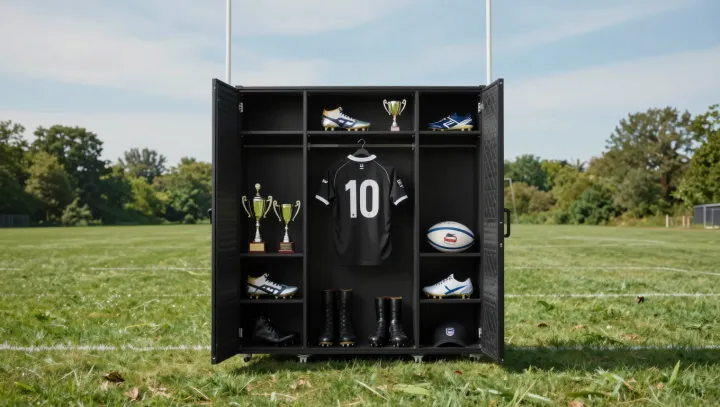
A travel trunk once designed to cross oceans now stays still, behaving less like luggage and more like a compact gallery. Hinged doors open not to anonymous drawers but to staged niches, lighting and modular rails that frame sneakers, rackets and jerseys the way vitrines frame couture. The object has quietly switched roles, from transport container to narrative device.
This evolution borrows directly from conservation science and display protocols used in fashion flagships, where humidity control and light exposure are treated almost like a problem of entropy. Shelves float to reduce contact points; padded mounts protect material stress points on leather or carbon-fiber. Transparent panels recall museology rather than locker-room metal, turning every item into an exhibit with provenance.
The interior layout also reflects economic thinking about marginal utility: space is allocated not by size but by emotional yield and frequency of use. Match-worn shirts sit at eye level; everyday training shoes occupy accessible but less prominent zones. Hidden drawers archive tickets, wristbands and small tokens, treating ephemera as archival records. What began as a piece of travel hardware now behaves like a private institution, curating a moving boundary between performance gear and personal history.