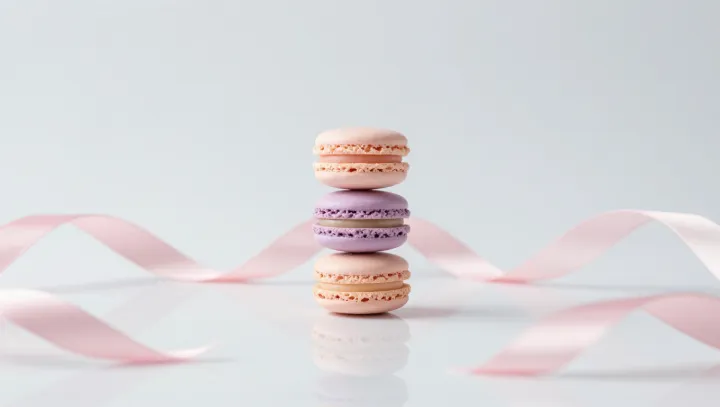
A small dome of almond, sugar and egg white now behaves like a fashion brand as much as a dessert. The Italian ancestor was a plain, unleavened almond cookie; the French version became a double shell with ganache, a color code and strict quality control, turning a fragile pastry into a symbol of national style and global luxury.
Behind the gloss, the product lives or dies by the physics of microscopic air bubbles in the meringue. Whipping egg whites drives protein denaturation and partial coagulation, building a foam whose stability acts almost like a controlled entropy increase inside the bowl. Slight over‑whipping, residual fat or humidity can collapse the network, erasing the signature feet along the shell’s base and leaving hollow tops or cracked surfaces that bakeries cannot sell at premium prices.
Sugar chemistry adds another filter of failure. Precise ratios and cooking stages govern crystallization and hygroscopic balance between shell and filling, while emulsification in ganache decides whether the interior stays smooth under transport and display. As luxury houses standardize diameter, hue and texture across boutiques and airlines, the macaron’s margin of error narrows, and a once-rustic almond cookie is recast as an edible test of industrial precision and cultural taste.