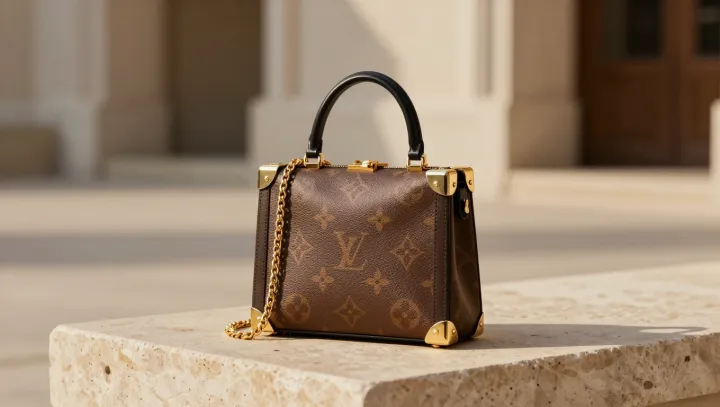
Canvas on travel trunks once served as a practical shield against dust and moisture; today the same idea underpins Monogram bags that circulate as cultural signals and financial instruments. What began as an experiment in coated fabric for hard-wearing luggage has turned into one of the most recognizable surfaces in consumer history.
The shift from anonymous luggage covering to branded Monogram coincided with the rise of conspicuous consumption and with advertising economics that prized instant visual recognition. A repeating motif created a low marginal cost way to project exclusivity at scale, while legal protection of the pattern built a durable brand moat. Over time, secondary markets added a form of portfolio logic: prices started to follow supply, rarity and perceived brand entropy, so a handbag could sit alongside equities as an alternative asset, tracked by resale indices and authenticated with near-forensic scrutiny.
Yet the object remains a tool, shaped by ergonomics and materials science. Modern Monogram canvas balances tensile strength, abrasion resistance and water repellency with calibrated weight, allowing bags to endure daily mechanical stress cycles. Hardware, stitching density and load distribution follow principles closer to structural engineering than to pure ornament. The result is a curious hybrid: a surface born to protect luggage that now protects value, status and the mundane contents of a daily commute in the same stroke.
The same coated canvas that once guarded trunks in transit now moves through city streets, trading floors and social feeds, carrying passports, laptops and balance sheets with equal discretion.