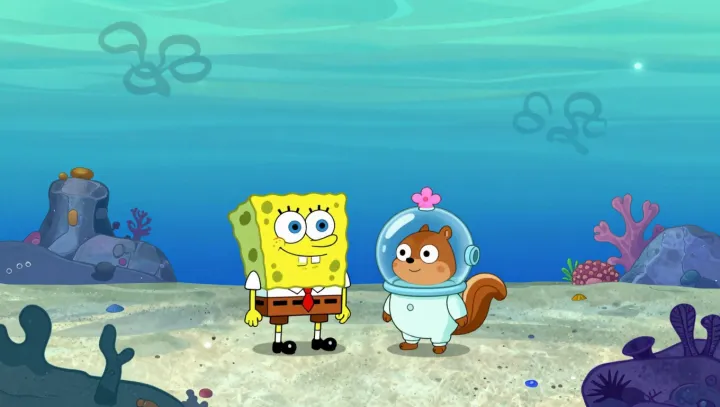
A land mammal in an underwater city is only barely science fiction if you rebuild the environment around it. Sandy’s tree dome would need to function like a compact undersea habitat: a sealed shell holding air at roughly surface atmospheric pressure while water outside pushes with far higher hydrostatic pressure. That pressure gradient dictates almost every engineering detail.
The dome’s wall must act as a pressure vessel, designed with stress analysis similar to a submarine hull. Materials would require high yield strength and a safety factor large enough to resist buckling, with curved geometry distributing external load. An airlock is mandatory to avoid explosive decompression; moving from ocean to dome would involve controlled equalization of pressure and gas volume based on basic gas law behavior.
Inside, Sandy’s mammalian lungs and alveoli only work if oxygen partial pressure and humidity are tuned to terrestrial respiratory physiology, while carbon dioxide is stripped using chemical scrubbers like soda lime and an active ventilation system managing tidal volume demands. Temperature control and thermal conductivity of the shell would be critical to keep core body temperature within homeostatic limits despite cold surrounding water.
Outside the dome, her suit would resemble a soft atmospheric diving system rather than a simple helmet. To avoid barotrauma and nitrogen narcosis, the suit interior must match dome pressure, not seawater pressure, using a rigid shell and flexible joints that transmit torque without exposing tissue to compression. Integrated gas cylinders and a closed‑circuit rebreather, with controlled oxygen fraction and carbon dioxide absorption, would let a squirrel wander Bikini Bottom without drowning, even if the biology remains strictly land based.