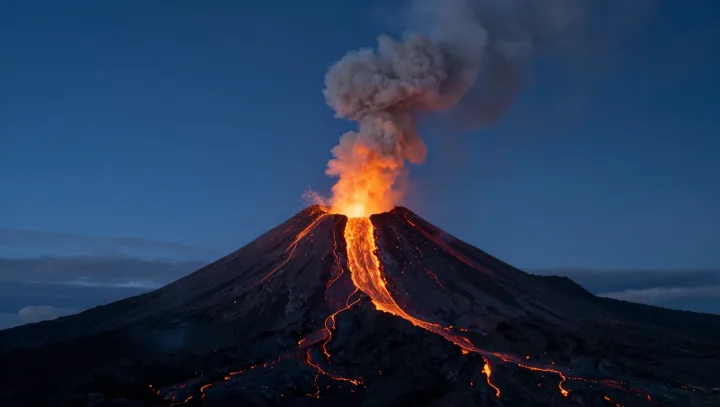
A silent crater can mask an active engine. Beneath a volcano that shows no surface activity, magma slowly rises from deeper reservoirs, carrying heat and dissolved gases. This melt stalls in chambers and dikes, where crystals grow and bubbles form, altering density and internal stress. Rock above acts as a lid, trapping the system.
Over long intervals, continued magma injection and volatile exsolution increase lithostatic and gas pressure within the magmatic system. Viscous magma limits degassing, so water vapor, carbon dioxide and sulfur dioxide remain compressed. Elastic deformation stores strain energy in the surrounding crust, while hydrothermal circulation redistributes heat without obvious eruptions.
When pressure exceeds the rock’s tensile strength or exploits pre‑existing faults, rupture propagates through the edifice. Fracture mechanics governs the opening of conduits that suddenly connect deep, high‑pressure magma to the surface. Rapid gas expansion performs mechanical work, fragmenting magma into ash and ejecting it at high velocity, converting centuries of gradual energy input into minutes of explosive power.