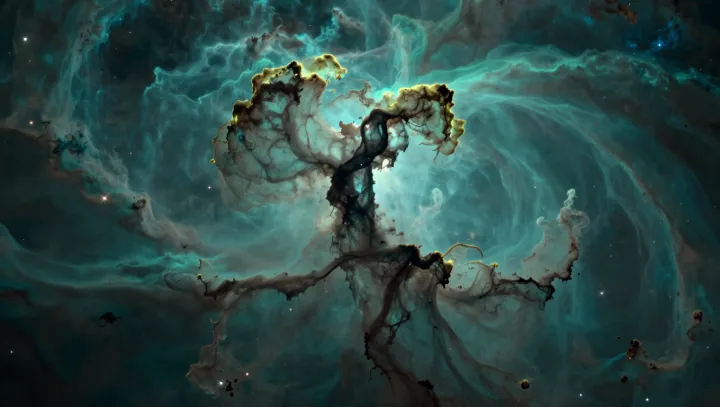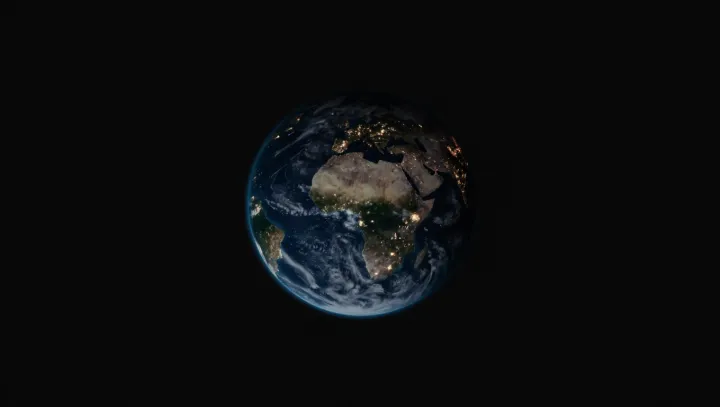
A star‑filled sky delivers identical photons to every retina, yet it never lands in two identical minds. What looks like a shared romantic moment is, at the neural level, two distinct stories being written in parallel.
Astrophysically, starlight is just electromagnetic radiation shaped by gravity and nuclear fusion, but the visual cortex does not stop at spectral analysis. It feeds its output into the amygdala, hippocampus and prefrontal cortex, where prior attachment experiences, reward prediction and threat detection are integrated. One brain links the wide field of view to intimacy and oxytocin‑driven bonding; another links the same low light and open space to loneliness or loss, amplifying cortisol and autonomic arousal instead.
Neuroscientists describe this as top‑down modulation layered on bottom‑up sensory input, a kind of Bayesian inference running on synaptic plasticity rather than equations. The default mode network pulls in autobiographical memory, cultural scripts about romance and expectations about the partner standing nearby. In effect, the brain treats the sky as a sparse data set and performs meaning compression, turning cold astrophysical parameters into a personal narrative about connection, risk or escape, while the stars remain unchanged overhead.