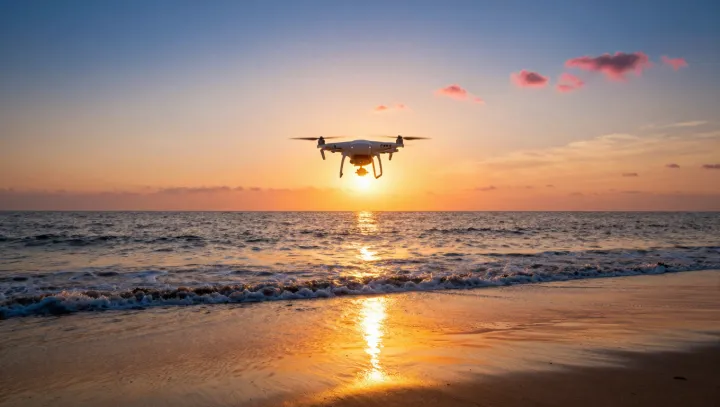
A low buzz over a construction site now signals more than a camera in the sky. That sound marks a full surveying workflow compressed into a few flight paths, turning raw pixels into measurement data with tape-measure accuracy in the time it once took to set up a tripod.
The shift started when drone imagery moved from pretty panoramas to structured data. Overlapping photos began feeding photogrammetry engines, which reconstruct dense point clouds and digital elevation models. Layer in RTK-GNSS and PPK corrections, and every pixel is anchored to the same geodetic reference frame, delivering centimeter-level positional accuracy across foundations, stockpiles, and facades. A process that demanded manual total-station shots across rough terrain now becomes an automated grid flown once, then mined repeatedly for dimensions, areas, and volumes.
This is less about gadgets and more about information entropy on site: messy ground conditions collapse into ordered, queryable models. Progress tracking, clash checks, and earthwork quantities pull from the same spatial database, turning surveying from a bottleneck into a background process. As autonomy, onboard edge computing, and computer vision mature, the air above the jobsite is converging on a permanent measurement layer, quietly redrawing what it means to know where everything actually is.