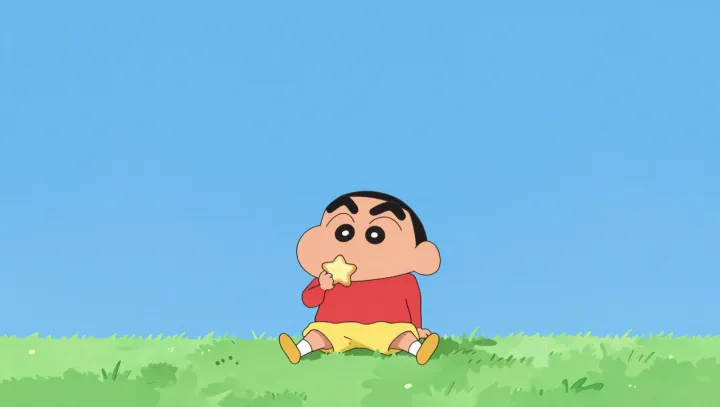
A cartoon built around a five-year-old boy’s rude jokes and rubbery dance has become one of Japan’s clearest studies of adulthood. What begins as slapstick slowly reveals debt, overwork, marital fatigue, and quiet loneliness, framed by a child who barely changes while everything around him does.
The series repeats the same domestic loop: commute, supermarket, TV, bedtime. That loop works like behavioral conditioning, training viewers to notice tiny deviations, from a parent’s strained smile to a boss’s empty praise. Consumer culture appears as an endless flow of novelty snacks, seasonal tie-ins, and limited-edition toys, turning the child’s whims into pure advertising logic and treating the household as a micro marketplace.
Psychologically, the show turns the five-year-old into a constant, a fixed baseline similar to a resting heart rate. Adults fluctuate around him, displaying burnout, status anxiety, and shifting gender roles. Jokes land because the child simply says what attachment theory and family systems theory describe in complex terms: parents are exhausted, work is intrusive, and affection competes with consumption. The cartoon stays low-tech and repetitive, yet with each gag, it updates a long-running case study of how a modern family survives the grind.