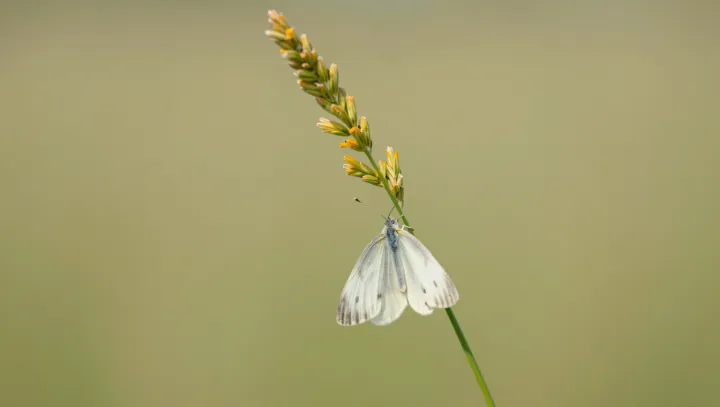
Wing patterns do not just advertise beauty in some butterflies; they also encode desire. A shared set of genes builds both the color patterns that spread across the wings and the neural wiring in males that flags those very colors as attractive, compressing two evolutionary problems into one.
Researchers tracking pigmentation genes and courtship behavior have uncovered tight genetic linkage between loci that control wing patterning and loci that influence male choice. Instead of evolving a preferred color via slow, independent mutational steps, populations can shift when a single regulatory region tweaks both the morph’s appearance and the sensory bias that favors it. Developmental pathways that specify scale structure, pigment synthesis and photoreceptor tuning become a coupled system for sexual selection and assortative mating.
This coupling acts like a firmware update in a neural network: the biological substrate is the same DNA, yet the change rewrites both the visual interface and the preference algorithm. Pleiotropy and linkage disequilibrium reduce the entropy of evolutionary search space, making it easier for new wing designs and matching tastes to rise together. The result is a built‑in feedback loop where makeup and type, phenotype and attraction, move in lockstep across generations.