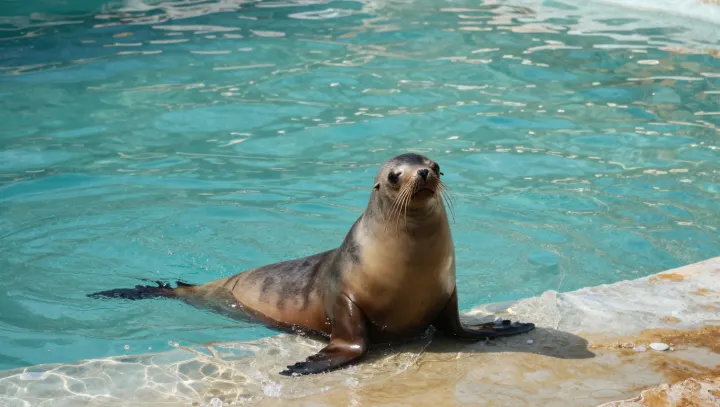
Huge eyes, round faces and clumsy flippers do not exist to charm human beachgoers. In seal and sea lion pups, these traits are fine-tuned survival hardware for life in cold, predator-dense seas, yet they incidentally plug straight into human perception of cuteness.
Biologists trace the effect to neoteny, the retention of infant features such as large eye-to-head ratio and short muzzle length. In pinnipeds, this facial morphology supports visual tracking of mothers on crowded rookeries and may enhance thermoregulation by changing surface area around the head. At the same time, those same proportions match the so-called baby schema that activates caregiving circuits in the human limbic system and modulates the hypothalamic–pituitary–adrenal axis, lowering aggression and biasing toward protection.
The flippers that make pups look adorably awkward on land are hydrodynamic structures in the water, optimizing drag and thrust while their high blubber content and low surface-area-to-volume ratio stabilize core body temperature. Vocalizations with high fundamental frequency travel well in noisy colonies and reliably trigger maternal retrieval. Human brains interpret that pitch and urgency using an attachment system calibrated for human infants, not marine mammals, so the same acoustic and visual cues that keep a pup alive in surf and ice also read, to us, as a universal call for care rather than a design aimed at our affection.