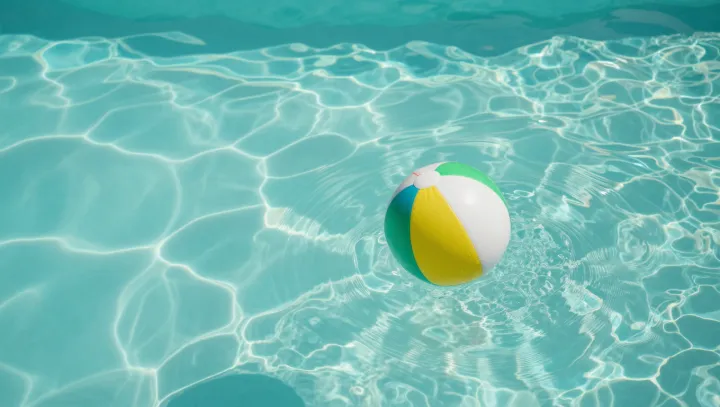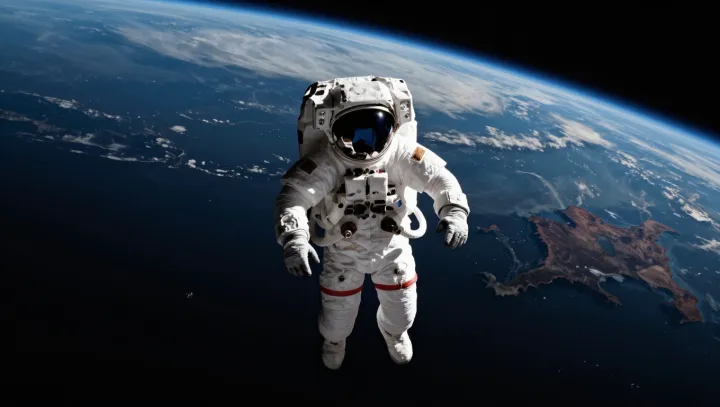
A vast pool filled with clear, still water becomes the closest thing to orbit on Earth. Astronauts spend hours inside it because neutral buoyancy lets their bodies hover, closely approximating the absence of effective weight. The pool turns a simple fluid into an operational testbed for the choreography of spacewalks.
Neutral buoyancy cannot recreate true microgravity, where both gravitational acceleration and continuous free fall shape how every tool and limb behaves, but it gets close enough for complex task rehearsal. Divers and engineers adjust ballast until an astronaut neither sinks nor rises, then treat the water volume as a three dimensional worksite. Inside, crews practice extravehicular activity procedures, refine handrail layouts, and test the ergonomics of tethers and suit interfaces long before hardware ever flies.
The underwater environment also exposes physical limits. Cardiovascular load, oxygen consumption, and fatigue patterns can be monitored while a suited astronaut repeats the same bolt turn or cable routing sequence. That data feeds into mission planning, from life support margins to workload timelines and contingency protocols. By the time a real hatch opens to the vacuum, most motions have already been debugged in a pool that quietly stands in for orbit.