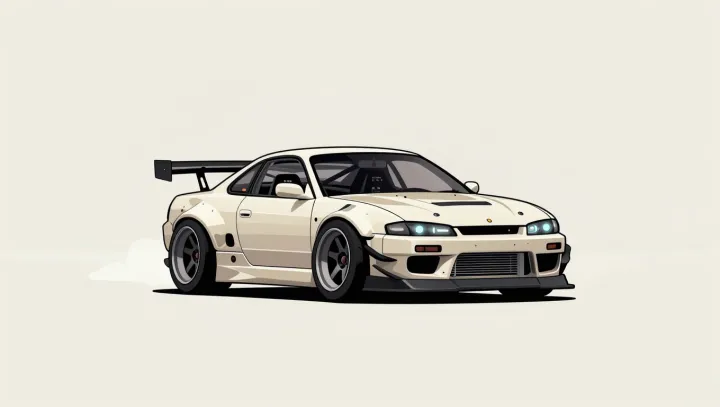
A parked car now executes more software instructions each second than the machines that once navigated humans through space. The gap is not symbolic; it is embedded in silicon, clock signals and code volume woven through every subsystem of the vehicle.
At the hardware level, transistor density on a single microprocessor has climbed from thousands to billions, shrinking feature size and lowering energy per operation in line with semiconductor scaling laws and thermodynamic efficiency limits. Higher clock frequency and parallel cores let an engine control unit, infotainment processor and safety controller run many instruction pipelines at once. Where an early guidance computer used limited core memory and simple instruction sets, a modern automotive system-on-chip combines cache hierarchies, vector units and specialized accelerators for graphics and signal processing.
On top of that silicon, software has become the dominant architecture: millions of lines of embedded code now handle real-time control loops, stability algorithms, perception stacks and encryption for vehicle networks. Control theory, from feedback gain tuning to model predictive control, governs how sensors and actuators interact under strict latency constraints. Instead of a single navigation program, a car orchestrates dozens of electronic control units over high-speed buses, each running its own firmware yet synchronized into one rolling computation.