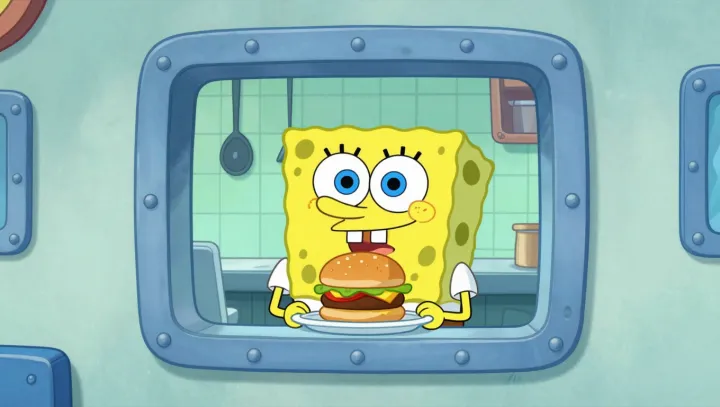
A yellow sponge under the sea looks like chaos; an adult brain sees calibration. What once passed as random gags now reads like a running experiment in how children learn to parse jokes, store experiences, and navigate invisible rules.
Developmental research shows that even slapstick depends on pattern recognition, theory of mind, and reward pathways such as dopaminergic signaling. SpongeBob’s world repeatedly breaks expectations, then quietly restores a baseline of friendship, routine, and work. That oscillation trains prediction error systems in the cortex while giving memory systems clear anchors: the Krusty Krab, the pineapple home, the recurring catchphrases. For a child, those stable landmarks help encode episodes into long‑term memory while the surrounding absurdity tests how far a rule can bend without breaking.
Social norms are threaded through the noise. Scenes about bad customers, failed driving tests, or neighbor conflicts expose ideas like fairness, embarrassment, and empathy, but wrap them in enough silliness to limit social anxiety responses. Humor acts as an emotional buffer, lowering physiological arousal so the brain can rehearse complex social scripts at a manageable level of cognitive load. Watching again as an adult, the same scenes light up a different network: instead of just laughing, you suddenly recognize how that so‑called nonsense helped prototype your sense of what is acceptable, what is ridiculous, and where the line between them still moves.