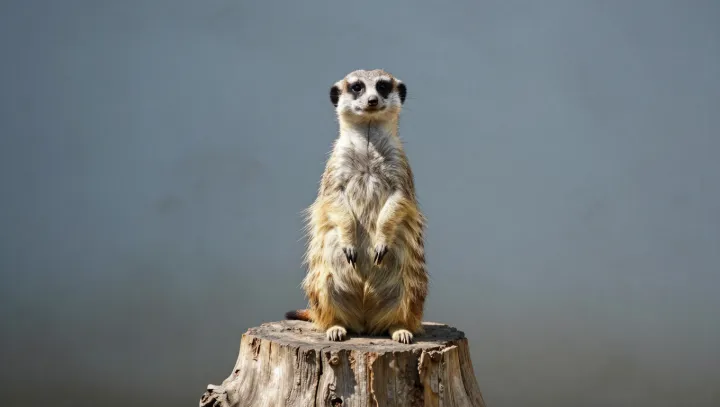
Blazing air shimmers above open sand while a meerkat stands upright, apparently defying the rules of heat and exhaustion. New research on its physiology and behavior shows that this small carnivore has turned thermal stress into a manageable trade-off, letting it scan for predators without cooking its internal organs.
The classic sentry pose exposes a dark, sparsely furred belly to the sky, but that surface functions more like a solar panel with a built‑in radiator. Large superficial blood vessels and a relatively high surface‑area‑to‑volume ratio allow convective and radiative heat loss even as incoming solar radiation rises. A low baseline metabolic rate limits extra heat from muscle activity, while countercurrent heat exchange in extremities helps keep the brain cooler than the rest of the body during intense exposure.
Standing posture also reduces the area directly facing the sun; most of the dense dorsal fur, which acts as insulation, faces away, cutting direct thermal load. Meerkats regularly shift orientation, using tiny changes in angle to manage the balance between heat gain and loss. Burrow entrances nearby create a rapid escape route to cooler, more stable microclimates, turning the underground network into a physical buffer against spikes in ambient temperature and predator approach alike.
The burden of vigilance is not carried by one animal for long. Group members rotate guard duty, limiting individual heat storage and allowing core temperature to return toward homeostasis below ground. This social schedule works as a biological risk‑management system, spreading both energetic cost and thermal stress while preserving a continuous early‑warning signal against raptors and other hunters that depend on surprise.