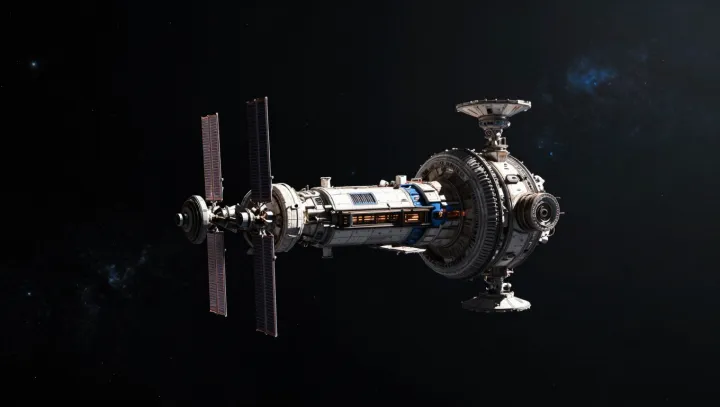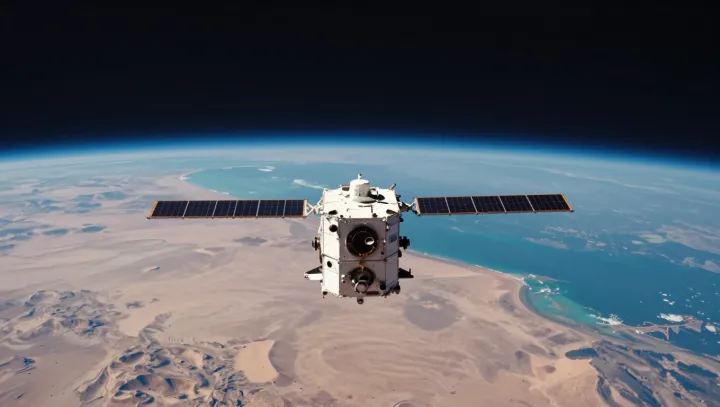
Relative motion between Dragon and the International Space Station stays near zero even while both race around Earth at orbital speed. That is the core of docking. The ship first enters a similar orbit, matching altitude and inclination so their paths almost coincide. From there, navigation shifts from global position to local geometry between two vehicles.
Instead of consumer GPS, Dragon relies on inertial measurement units, star trackers, lidar, and thermal and visible cameras. These feed an onboard guidance, navigation and control computer that continuously solves the two-body problem and applies Clohessy–Wiltshire equations for relative motion. Sensor fusion estimates the six-degree-of-freedom state vector: position and velocity in three axes between Dragon and the station.
With that state vector, the software computes delta-v for a scripted series of phasing, height-adjust, and closing burns. Each thruster pulse reshapes Dragon’s orbit so that orbital period and phase angle converge on the station. As range falls, lidar returns and optical targets refine the relative navigation solution, tightening errors to centimeters and fractions of a degree.
During final approach, control laws in a closed-loop guidance system command short, frequent pulses to null relative velocity along the docking axis. The system respects approach corridors, hold points, and keep-out zones, enforcing constraints in real time. GPS may still provide coarse absolute orbit, but docking accuracy comes from this continuous solution of orbital dynamics between two nearby spacecraft.