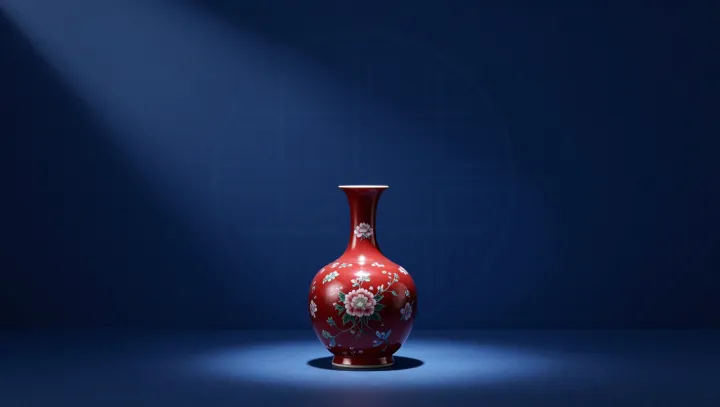
Liquid glaze, not paint, carries the drama in blood‑red Chinese porcelain. A suspension of silica, alumina and copper oxide is applied to a vessel, then locked into a kiln where atmosphere, temperature and cooling rate become variables in a delicate experiment. Only under strong reduction firing do copper ions shift state and yield a dense, translucent red rather than a washed‑out grey or blotchy brown.
That dependency on redox chemistry turned every firing into a gamble, similar to pushing a quantum system toward a single observable outcome in wavefunction collapse. Small fluctuations in oxygen partial pressure, thermal gradient or viscosity could destroy months of work. The glaze records these conditions in its microstructure: phase separation, crystallization and subtle variations in refractive index generate depth and a sense of internal light that paint cannot imitate.
Scarcity followed from this narrow process window. Many kilns could achieve reliable white porcelain, governed mainly by vitrification and sintering, but very few could repeatedly land the precise entropy balance of a stable, even copper red. Pieces that survived emerged as proof of mastery over thermodynamics rather than mere craftsmanship. Over time collectors treated this control of furnace atmosphere as a cultural moat, raising the finest blood‑red wares to the symbolic crown of Chinese porcelain.