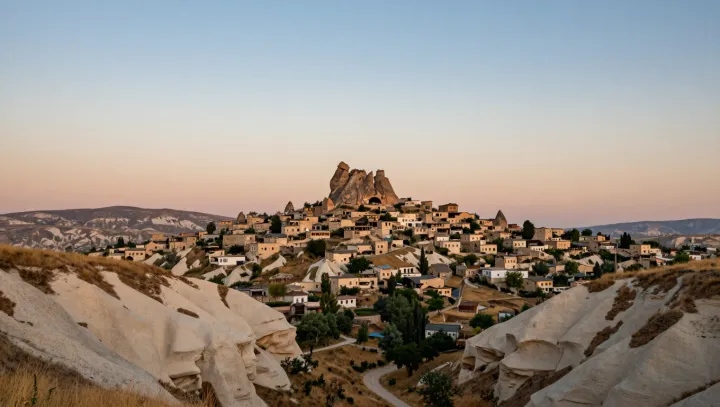
A windswept grassland border belt now hosts one of China’s highest-density clusters of nationally recognized Beautiful Towns, even as many visitors still reduce Inner Mongolia to roast whole lamb and yurts on postcards.
The shift began with planning rather than spectacle. Local governments treated each town as a node in a regional network, not a standalone attraction, applying classic agglomeration economics to concentrate investment, public services and transport links. Instead of copy-paste tourist kitsch, officials leaned on landscape ecology and carrying capacity to cap building heights, protect river corridors and keep steppe views as the main asset, turning environmental constraints into a form of spatial branding.
Culture then became an operating system rather than a decorative skin. Design guidelines hard-wired Mongolian motifs into street furniture, markets and homestays, while service training quietly raised the basic reproduction number of word-of-mouth: one satisfied tour group reliably generated more. Digital platforms amplified this network effect, routing short-stay traffic into multi-town itineraries that extend average length of stay and lift per-capita spend. The result is a border region that functions less like a single destination and more like a tightly coupled portfolio of Beautiful Towns, hiding sophisticated place-making behind a simple image of grilled meat and open sky.