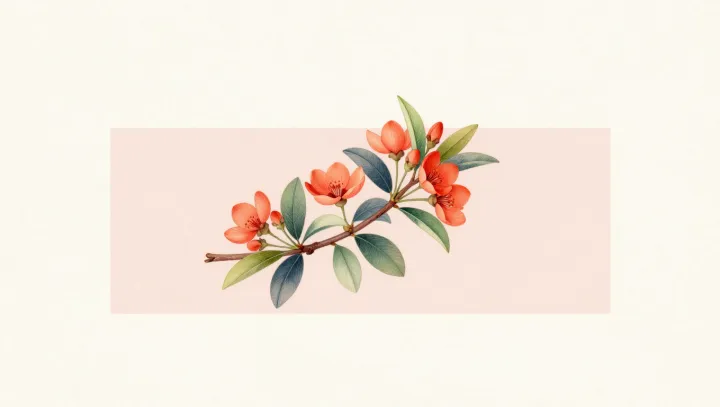
An ordinary pea relative has produced a flower that looks uncannily like an orchid, raising a blunt question for botanists: how did a legume end up wearing another family’s floral uniform.
The answer lies in convergent evolution, where unrelated lineages arrive at similar designs under similar constraints. In this pea, the classic papilionaceous pattern of banner, wings and keel has been stretched, folded and rotated until the corolla resembles an orchid’s labellum and lateral petals. Developmental biology points to shifts in homeotic gene networks, especially MADS‑box transcription factors that set petal identity along the floral axis. Small changes in their expression domains can flip symmetry, exaggerate one petal at the expense of others and create the illusion of an entirely different blueprint.
Pollination ecology supplies the pressure that makes such anatomical experiments stick. If a flower can tap into the established search image that insects use for orchids, it gains a shortcut to efficient pollen transfer. Selection then reinforces traits such as bilateral symmetry and nectar guides, fine‑tuning the marginal benefit of each additional tweak. Behind the visual trick is a familiar toolkit of meristem patterning, organ primordia positioning and protein–DNA binding, repurposed until a pea effectively passes, at a glance, for something else entirely.