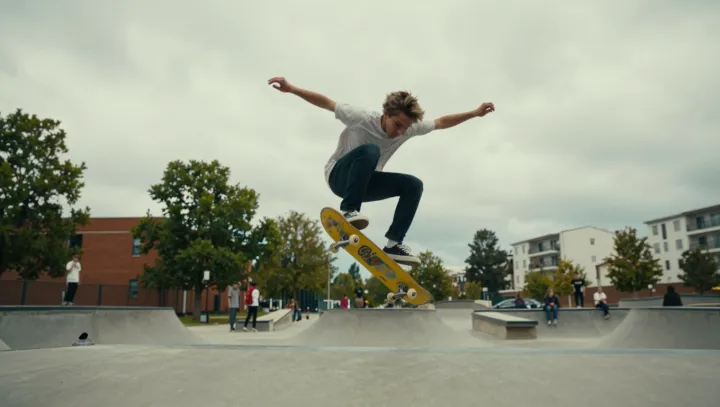
Skate progression, in the elite view, starts not with new tricks but with sensory detail. Before the flip, spin, or slide, top coaches now focus on teaching riders to let their feet read the deck the way fingers read Braille, building a dense map of pressure, vibration, and micro-movement.
What looks like style is often proprioception: the nervous system’s ability to locate joints and limbs without looking. Repetition on basic pushes, manuals, and weight shifts refines mechanoreceptors in the feet, which feed cleaner data to the brain. Neuroplasticity then does its slow work, strengthening synaptic pathways until balance corrections happen below conscious awareness, much like a background process in a network of firing neurons.
Sports scientists describe this as upgrading sensory resolution rather than merely adding motor output. The more precisely a skater can detect center of mass changes and ground reaction forces through the board, the more stable the system becomes under chaos: imperfect landings, rough pavement, shifting speed. Motor learning research shows that when this foundation is secure, complex tricks demand less cognitive load, reduce injury risk, and scale more reliably under stress, whether in a contest run or a single try down a stair set.
For elite skaters, that is why a session of low, slow carving or repeated ollies in place is not wasted time but core infrastructure work. The board becomes less a tool and more an extended sensory organ, turning each push into new data for the brain to encode.