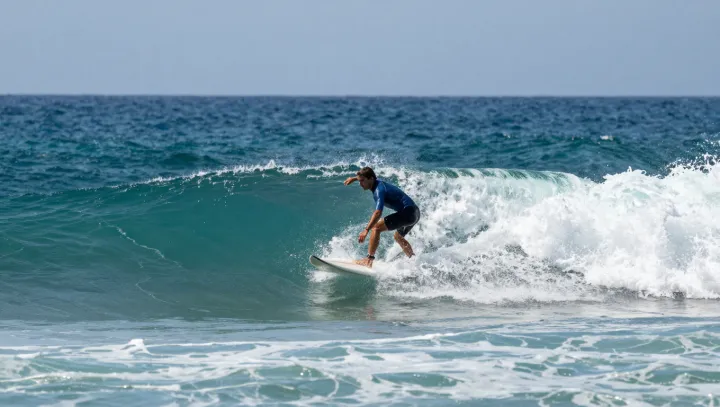
Invisible lines on the ocean surface now define the cutting edge of elite surfing. What used to be a race to catch more waves is turning into a contest of who can decode the water’s hidden structure fastest and most accurately.
Performance coaches describe a shift from raw fitness to perceptual intelligence, treating the surfer’s brain as a pattern recognition engine governed by neural plasticity and sensory integration. Instead of simply paddling harder, athletes train to map rip currents, refraction zones and pressure gradients as if they were contour lines on a moving topographic map. Subtle changes in surface texture, micro-swell interference and wind shear become data points that the visual cortex and vestibular system fuse into a predictive model of where the next rideable wall will stand up.
Sports scientists link this skill to concepts such as Bayesian inference and situational awareness, arguing that the marginal gains from more strength or aerobic capacity are shrinking compared with the upside of faster water reading. Motion-tracking research shows that top surfers commit earlier to better lines with fewer corrections, suggesting a lower cognitive load and more efficient motor planning. In a crowded lineup and increasingly competitive tour, the advantage belongs less to the athlete who can out-paddle peers than to the one who can see a wave that does not yet exist.