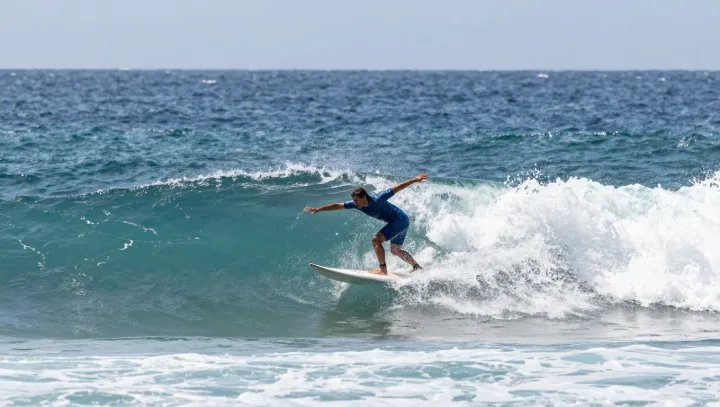
Ocean swell under a surfboard turns the entire body into a live pressure sensor. As the board rises, drops and tilts, joints compress and decompress in rapid cycles, producing sustained mechanical load on muscles, tendons and joint capsules. This load activates proprioceptors and mechanoreceptors that also respond during structured deep‑tissue sports massage.
In both surfing and massage, deep pressure deforms fascia and muscle fibers, stimulating Golgi tendon organs and muscle spindles. These receptors feed the somatosensory cortex with high‑bandwidth data about limb position and force. When a wave face steepens, the rider must micro‑adjust stance, creating isometric contractions similar to the bracing therapists induce when they apply slow, heavy strokes along a muscle chain.
Hydrostatic pressure from immersion adds another layer of input, complementing the localized compression where feet grip the board and knees absorb impact. Repeated loading modulates autonomic nervous system balance, often shifting the body toward parasympathetic dominance, a state associated with reduced muscle tone and pain perception. While surfing cannot replicate the precision of a therapist’s hands, the combination of rhythmic deep pressure, dynamic joint angles and continuous vestibular challenge creates a whole‑body analogue to sports massage that many athletes experience as both taxing and restorative.