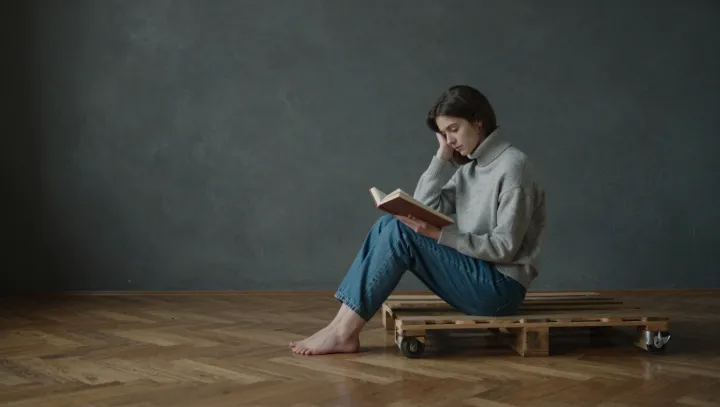
A plain turtleneck can act like a quiet piece of visual engineering for the upper body. By combining color contrast, fabric thickness and neckline geometry, it alters how the eye reads vertical length and contour, creating the perception of a longer neck and a sharper mandibular angle without changing anatomy.
The effect starts with color contrast and luminance contrast. A dark, uniform column around the neck reduces visual noise from skin tone variations and clothing breaks, so the eye tracks one continuous vertical line. This vertical emphasis exploits basic Gestalt perception and makes the cervical spine region appear more elongated. When the sweater and the face differ in value, the skin emerges as a clearer silhouette, which exaggerates the edge of the jaw through contour enhancement.
Fabric thickness then acts like soft sculpting. A medium density knit adds a controlled radius around the lower neck and upper trapezius, filling hollows while avoiding bulk at the submandibular area. This selective padding increases the relative contrast between the curve of the collar and the harder line of the jaw, a simple application of edge detection in visual cortex terms. If the fabric is too chunky, it competes with the jaw; if it is too thin and collapsing, it removes that supportive baseline and the neck can read shorter.
Neckline geometry finishes the illusion. A high, close cylinder that stops just under the jaw creates a clear boundary condition, like a clean reference axis in analytical geometry, from which the jawline appears to project outward. Slightly folding or angling the collar inward narrows the apparent neck diameter, shifting the perceived aspect ratio in favor of height. Even small adjustments in collar height and curvature change the visual vector of the neck, so the same bone structure can register as markedly more defined.