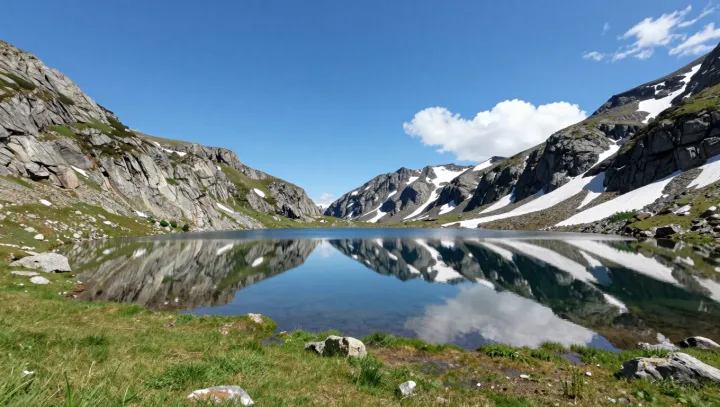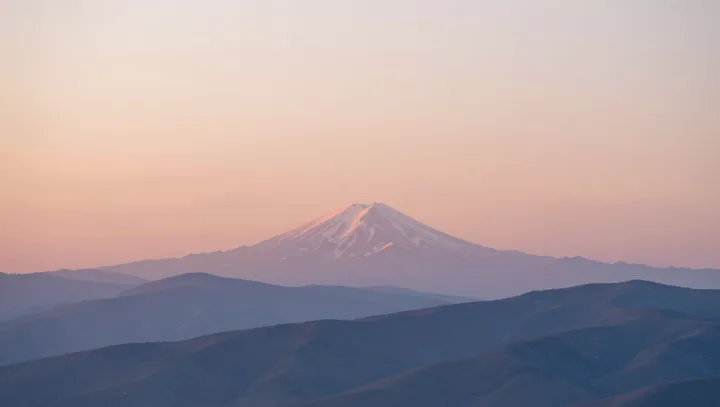
Bright snow on a summit can sit almost motionless while rock and asphalt far below simmer in the same sunlight. The contrast is not a trick of distance but a consequence of how the atmosphere handles energy as air climbs, cools and thins.
Sunlight delivers nearly the same incoming solar radiation to the valley floor and to the peak. The split happens in the air column in between. As air rises, it expands in lower pressure and cools, a process known as adiabatic cooling. That cooling, combined with a steep environmental lapse rate, means the summit starts from a lower baseline temperature even before surface properties enter the picture. Colder air holds less water vapor, limiting downwelling longwave radiation and slowing the melting of snow.
Snow then adds its own feedback loop. With a very high albedo, a snowfield reflects most incoming shortwave radiation back to space instead of absorbing it as heat. Dark soil or rock at the base absorbs far more energy, warms, and boosts sensible heat flux into the overlying air. Thinner air at altitude contains fewer greenhouse gases per unit volume, so less infrared radiation is trapped around the surface. The result is a sharp vertical temperature gradient in one continuous system powered by the same Sun, leaving summer-like heat below and frozen white above.
Seen from a distance, that single shaft of light falling on two thermal realities turns a mountain into a standing cross-section of the planet’s energy budget.