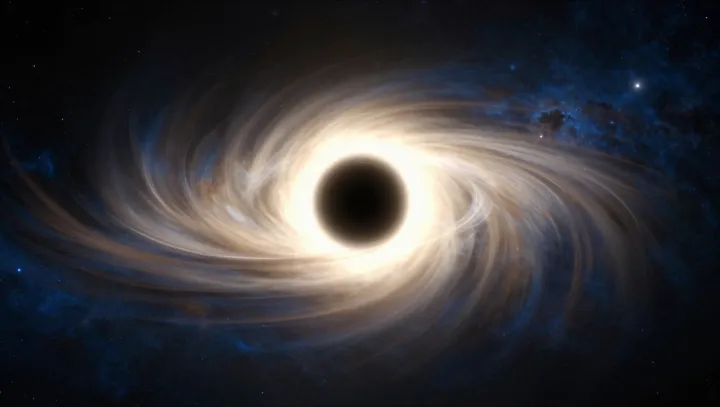
An 11‑dimensional universe earns serious attention in theoretical physics, while a detachable soul does not in neuroscience. The asymmetry comes from evidence, not cultural bias. Extra dimensions arise as a mathematical necessity inside certain models that aim to unify gravity and quantum mechanics.
In string theory and related frameworks, consistency conditions and anomaly cancellation push equations to higher‑dimensional space. Those models can generate testable consequences for particle spectra and cosmic structure, even if extra dimensions are compactified beyond direct perception. Dimensions here are not fantasy realms but parameters in a formalism that must fit empirical constraints.
Neuroscience works in the opposite direction: from tissue to experience. Using functional MRI, single‑unit recordings and electroencephalography, researchers map perception, memory and agency onto neural circuits. Consciousness tracks with patterns of synaptic activity and breaks down when those networks are damaged. No signal, no function.
When the brain is cooled, anesthetized or starved of oxygen, subjective awareness fades in lockstep with measurable changes in cortical oscillations and neurotransmitter dynamics. No independent information channel or energy signature has been detected that would carry a detachable soul once neurons stop firing. For now, physics keeps its extra dimensions; the soul remains a metaphor, not a separate layer of nature.