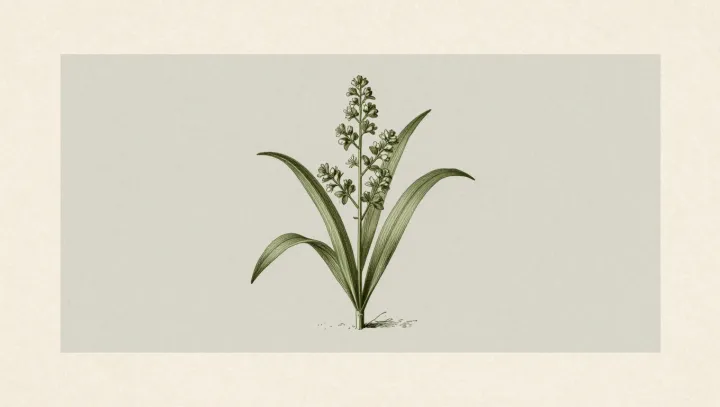
A flower that once passed as a shrimp’s curved back now anchors one of botany’s clearest lessons in coevolution. The orchid’s bizarre outline, thickened lip and tight nectar tunnel are not decorative excess. They are the product of relentless natural selection, tuning petals and spurs to a single pollinating insect’s body plan and behavior.
In this orchid, every millimeter of curvature functions like a lock designed for one key. Pollination biology shows that the insect’s legs, eyes and mouthparts follow a precise track, brushing past the anther and stigma in a repeatable mechanical circuit. Features that once helped the bloom hide among crustaceans were gradually repurposed: a curve that mimicked a shrimp’s back now matches the arc of an insect abdomen; pigment patches align with the insect’s visual system; scent chemistry targets its olfactory receptors. Structural genes that control floral symmetry and spur length provide the developmental toolkit, while differential reproductive success acts as the marginal effect that keeps refining the match.
The result is a living case study used in textbooks to show how extreme flower morphology, reproductive isolation and pollinator specificity can emerge from countless small shifts in anatomy and behavior, rather than from any single dramatic leap.